Quick answer
Sustainable printing means making print that does its job with as little environmental impact as possible. In practice that comes down to five decisions: paper from responsible or recycled sources (look for FSC certification), finishes that keep the piece recyclable, printing the right quantity rather than a round number, clean data so mailings are not wasted on wrong or duplicate addresses, and a printer with a certified environmental management system, such as ISO 14001. Fretwell holds ISO 14001:2015 and FSC chain of custody (C013888), and FSC-certified stocks are available across our litho and digital ranges at no extra cost for standard weights.
Key takeaways
- Start with the paper: FSC-certified or recycled stock is the biggest single choice you control. FSC-certified stocks cost no more at Fretwell for standard weights.
- Plastic laminates, foils and heavy coatings can make paper harder to recycle. Use them where they earn their place, not by default.
- The greenest print is the print you don't waste: order realistic quantities, use digital for short or versioned runs, and cleanse mailing data before you post.
- Ask suppliers for evidence: an ISO 14001 certificate and an FSC chain of custody code you can check, not a vague 'eco' badge.
- If you make green claims about your print, the UK Green Claims Code expects them to be accurate, clear and backed up.
What makes printing sustainable?
No printed piece has zero impact. Paper has to be grown, made and transported, presses use energy, and every job creates some trim and make-ready waste. Sustainable printing is about reducing that impact at each stage, and about making sure the finished piece can be recycled when it has done its job.
Most of the decisions that matter are made before anything reaches the press, so they sit with the person writing the brief:
| Decision | What to aim for | Why it matters |
|---|---|---|
| Paper source | FSC-certified or recycled stock | Traces fibre to responsibly managed forests or reuses fibre already in circulation |
| Finish | Uncoated, or coated paper with a water-based or press coating rather than plastic film | Keeps the piece easy to recycle in the paper stream |
| Quantity | A realistic run, plus reprints if needed | Unused stock is the most avoidable waste in print |
| Format | Standard sizes that use the sheet efficiently | Less trim waste, and often cheaper postage for mailings |
| Data (for mailings) | Cleansed, de-duplicated and suppressed lists | Stops packs being printed and posted to people who won't receive them |
| Supplier | Certified environmental management (ISO 14001) and FSC chain of custody | Independent, audited evidence instead of marketing claims |
Choosing paper: FSC, recycled or both
Paper is usually the largest material input in a print job, so it is the choice with the most leverage. There are two main routes, and they are not mutually exclusive.
- FSC-certified paper comes from forests and supply chains certified by the Forest Stewardship Council. FSC Mix and FSC Recycled labels also exist for papers that combine certified virgin fibre with recycled fibre. Our FSC certified paper guide explains the labels and what chain of custody means.
- Recycled paper reuses fibre already in circulation. It is widely available in uncoated grades, and coated recycled stocks are available too. Ask for samples, because recycled stocks can look and feel slightly different from virgin papers.
Paper is also one of the most recycled materials in Europe. The European Paper Recycling Council reports that 75.1% of all paper and board consumed in Europe in 2024 was recycled. That figure covers graphic paper, packaging and tissue (EPRC monitoring report, published July 2025). The practical lesson for print buyers: design so your piece can join that stream.
Weight matters too. A lighter stock uses less fibre and can bring a mailing into a cheaper postage band, while uncoated paper feels bulkier than coated paper of the same weight. Our paper weight and GSM guide and silk vs gloss vs uncoated guide help you pick the lightest stock that still feels right.
FSC costs no more for standard weights
At Fretwell, FSC-certified stocks are available across our litho and digital print ranges at no extra cost for standard weights. Recycled, uncoated and specialist substrates can be sourced on request.
Finishes, coatings and recyclability
Finishes are where a recyclable sheet of paper can become a mixed-material item. The UK paper industry's recyclability guidelines (Confederation of Paper Industries, revised 2022) list laminates, coatings, inks, varnishes and adhesives as components that can cause problems in recycling. They recommend keeping them to no more than 10% of pack weight. Those guidelines are written for paper-based packaging, but the same principle applies to brochures, mailers and cartons.
| Finish | Recyclability | Lower-impact alternative |
|---|---|---|
| Plastic film lamination (gloss, matt, soft-touch) | Bonds a plastic layer to the paper, so the piece is no longer paper alone | Uncoated stock, or a press-applied or water-based coating for scuff resistance |
| Foil blocking | Small areas are usually fine; large foiled areas add non-paper material | Keep foil to a logo or detail, or use a metallic Pantone ink on litho |
| Spot UV | A thin varnish layer, usually over a laminate | Use it for emphasis on key elements, not as a default |
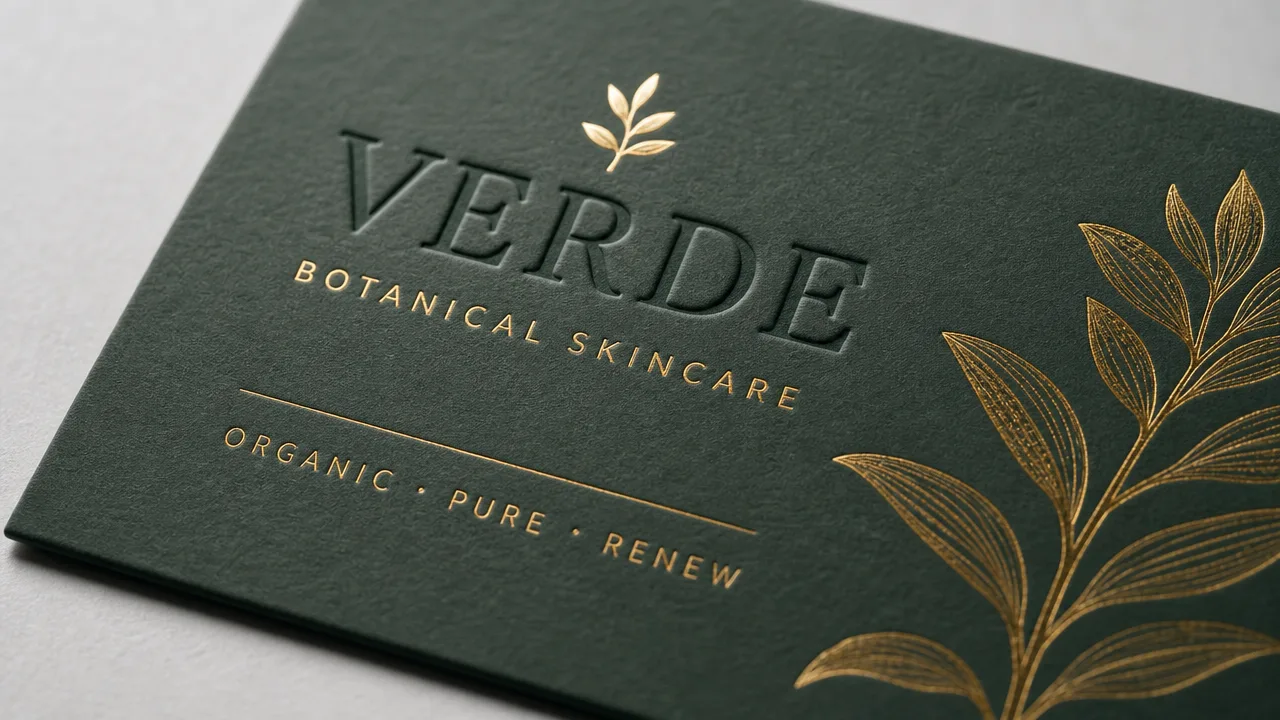
| Embossing and debossing | Shapes the paper itself, so no extra material is added | Already a low-impact way to add a premium feel |
| Plastic windows and inserts | Mixed material that has to be separated | Paper-based or windowless envelopes and paper inserts |
Our litho presses apply coatings inline in a single pass, which can give a sheet some protection without a separate plastic laminate. For packaging, we offer water-based coatings and eco-friendly inks as alternatives to UV or solvent-based finishes. See print finishes explained for how each finish works and what it costs.
Cut waste before it is printed
Material that is printed and never used is the clearest waste in print, and much of it can be avoided at the planning stage.
- 1
Order what you will use
A slightly higher unit price on a realistic run is usually better than a cupboard of out-of-date brochures. Digital printing has no plates and no minimum run, so short reprints are practical. Our litho vs digital guide explains when each process makes sense.
- 2
Version instead of over-printing
If content differs by region, audience or date, digital and variable data printing can produce exactly the versions you need. You don't have to print one large generic run and throw part of it away. See variable data printing.
- 3
Use standard formats
Standard paper and envelope sizes make efficient use of the press sheet and fit standard postal formats. Check our paper sizes and envelope sizes guides before choosing an unusual format.
- 4
Clean your mailing data
Duplicates, gone-aways and people who have opted out all waste print and postage. Deduplication and suppression screening before a mailing removes them. Read our mailing data cleansing guide.
- 5
Keep production under one roof
When print, personalisation, enclosing and mailing happen at one site, printed components don't have to be moved between separate suppliers. At Fretwell, all of that happens in Keighley.
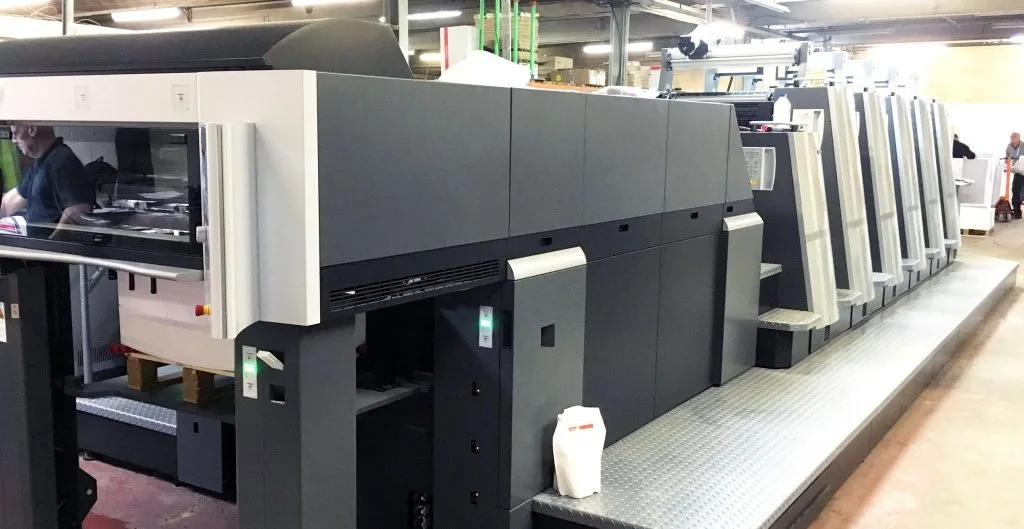
Commercial print on FSC-certified stock
B2 litho and digital printing in Keighley, with FSC-certified papers at no extra cost for standard weights and finishing done in-house.
Explore the serviceHow to choose a sustainable printer
'Eco-friendly' on a website costs nothing to write. These are the questions that produce evidence you can check, and that you can reuse in your own supplier questionnaires and ESG reporting:
Fretwell's answers: we are certified to ISO 14001:2015 (certificate 11595-EMS-001) and hold FSC chain of custody certification (C013888). Our environmental policy commits us to minimising waste, reducing single-use energy sources where practical, preventing pollution and using recyclable packaging and materials wherever practical. Certificates and the policy statement are on our certifications page.
Making green claims about your print
If your printed piece, or your marketing around it, says it is sustainable, recycled or eco-friendly, the claim has to stand up. The Competition and Markets Authority's Green Claims Code (published September 2021) sets out six principles. Claims must:
- be truthful and accurate
- be clear and unambiguous
- not omit or hide important relevant information
- make only fair and meaningful comparisons
- consider the full life cycle of the product or service
- be substantiated
Be specific
'Printed on FSC-certified paper' with the correct FSC label is a claim you can substantiate. 'Eco-friendly brochure' on its own is vague. If you want to use the FSC logo, ask us at the briefing stage so the label and licence code can be applied correctly.
For the wider question of how mail compares with digital channels on carbon, see is direct mail bad for the environment?. For definitions of the terms used here, see the print and mail glossary.