Quick answer
GSM stands for grams per square metre. It is the weight of one square metre of a paper or board, and the standard way paper weight is specified in the UK. The higher the number, the heavier and usually stiffer the sheet. Everyday office paper is 80gsm. Letterheads are typically 100–120gsm, leaflets and brochure pages around 130–170gsm, and business cards 350gsm or more. GSM is weight, not thickness: an uncoated paper is usually thicker than a coated paper of the same GSM.
Key takeaways
- GSM (g/m²) measures weight per square metre, defined for paper and board in ISO 536.
- 80gsm is standard office and copier paper. An A4 sheet of it weighs about 5g.
- We typically print letterheads on 100gsm or 120gsm, and business cards on 350gsm, or 450gsm duplex board for a premium feel.
- Weight and thickness are different. Uncoated stock feels thicker than silk or gloss at the same GSM.
- For mailings, GSM drives postage: a Royal Mail Letter must weigh 100g or less, contents and envelope included.
What does GSM mean?
GSM (sometimes written g/m² and formally called grammage) is the mass of a single sheet of paper one metre by one metre. A sheet of A0 is one square metre, so an A0 sheet of 80gsm paper weighs 80g. A4 is one sixteenth of A0, so an A4 sheet of 80gsm paper weighs about 5g.
Because GSM is measured on a fixed area, it lets you compare any two papers directly, whatever size they are cut to. It replaces older systems such as US 'pound' weights, which depend on the size of the sheet the weight was measured on and do not convert neatly. If a supplier quotes paper in pounds, ask for the GSM.
Paper weight guide: which GSM for which job?
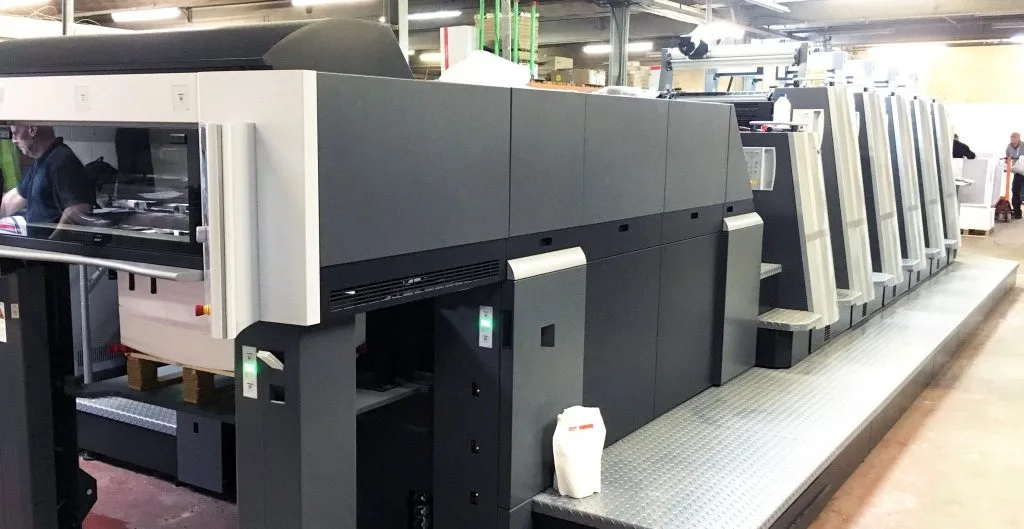
There is no single right weight for each job, and the cut-off between paper and card varies by supplier. The ranges below are what we typically recommend at our Keighley print floor, based on how the piece will be handled, folded and posted.
| Weight | How it feels | Typical uses |
|---|---|---|
| 80–90gsm | Everyday office paper | Copier paper, internal documents, mono letters in a mailing pack |
| 100–120gsm | Noticeably crisper than office paper | Letterheads, compliment slips, personalised letters, continuation sheets |
| 130–170gsm | Light but substantial | Flyers, folded leaflets, brochure and catalogue inner pages, posters |
| 200–250gsm | Light card | Brochure covers, heavier flyers, menus, inserts that need to stand up |
| 300–350gsm | Card | Postcards, business cards, presentation folders, invitations |
| 400gsm and over | Heavy board | Premium business cards, including 450gsm duplex (two 225gsm sheets laminated together) |
What GSM is a business card?
Most business cards are printed on 350gsm board. For a card that feels more substantial in the hand, we laminate two 225gsm sheets together to make a 450gsm duplex card, often with a coloured core. See our business card and stationery printing.
GSM vs thickness: why two 150gsm papers can feel different
GSM tells you how heavy a paper is, not how thick it is. Thickness (called caliper) is measured separately, in microns (thousandths of a millimetre). Two papers of the same GSM can have quite different calipers, depending on how the fibres are pressed and whether the sheet is coated.
- Uncoated papers are bulkier. They feel thicker and more tactile than coated papers of the same weight, and are easy to write on.
- Silk and gloss coated papers are denser and smoother. They feel thinner at the same GSM, but show photographs and colour more sharply.
- Bulky or 'high-volume' stocks are made to feel thicker than their GSM suggests, which can add presence without adding postage weight.
If thickness matters, for example to make a brochure feel substantial or to keep a pack under a postal thickness limit, ask for the caliper as well as the GSM. Our silk vs gloss vs uncoated guide compares the three finishes in more detail.
How weight affects folding and binding
Heavier stocks are stiffer, and that changes how they behave in finishing:
- Creasing before folding. Card and heavier papers crack along a fold if they are folded straight, especially coated stocks with heavy ink coverage across the fold line. We crease (score) them first. Our MBO folders have Tri-Crease scoring built in, so creasing and folding happen in one pass.
- Saddle-stitched books. Heavy inner pages make a book bulkier at the spine and push the inner pages outwards (called creep). A lighter text weight with a heavier cover usually works better.
- Thicker books with heavier pages may suit a squared spine instead of staples. Our binding methods guide explains when to switch.
Business cards and stationery on the right stock
Letterheads, compliment slips and cards printed and finished in-house, with foiling, spot UV, soft-touch lamination and duplex boards.
Explore the serviceGSM and postage: weight adds up
For anything you post, paper weight affects the cost. Royal Mail's cheapest business format, the Letter, has a maximum weight of 100g and a maximum thickness of 5mm, including the envelope. Over that, the item becomes a Large Letter, which costs more to send.
| Paper weight | Weight of one A4 sheet | A4 sheets per 50g |
|---|---|---|
| 80gsm | 5.0g | 10 |
| 100gsm | 6.2g | 8 |
| 120gsm | 7.5g | 6 |
| 150gsm | 9.4g | 5 |
| 170gsm | 10.6g | 4 |
| 250gsm | 15.6g | 3 |
| 350gsm | 21.8g | 2 |
A pack with a letter, a leaflet, a reply form and a reply envelope can reach the 100g limit faster than expected. Dropping the leaflet from 170gsm to 130gsm, or the letter from 120gsm to 100gsm, can keep a pack in the Letter format. Our guides to envelope sizes and Royal Mail Advertising Mail explain the formats and prices. Weigh a fully assembled sample before you commit to a print run.