Quick answer
Saddle stitching folds sheets in half and staples them through the spine. It is the quickest and most economical binding for slimmer brochures, booklets and catalogues, and the page count must be a multiple of four. PUR perfect binding glues the pages into a square, printable spine, which suits thicker brochures, catalogues and reports. Saddle stitching suits books up to a few dozen pages (some printers go to 128); choose perfect binding once there is enough paper to form a spine. Wiro (wire-o) binding lets a document lie fully flat or fold back on itself, and case binding gives a hardback book.
Key takeaways
- Saddle-stitched page counts must be divisible by four, because each folded sheet makes four pages.
- Saddle stitching suits slimmer books. One UK printer offers it up to 128 pages and recommends 120–130gsm paper above 60 pages.
- PUR perfect binding needs enough paper to form a spine. One printer gives minimums of 56 interior pages on 80gsm and 24 on 250gsm for litho work.
- PUR adhesive is more durable and flexible than EVA hot melt glue, but takes about 72 hours to cure completely.
- Inner pages of a saddle-stitched book stick out further than outer ones (creep), so keep text well inside the trim.
Binding methods compared
| Saddle stitch | PUR perfect binding | Wiro / wire-o | Case binding (hardback) | |
|---|---|---|---|---|
| How it works | Folded sheets stapled through the spine fold | Pages glued into a square spine with PUR adhesive, then a wraparound cover | Holes punched along one edge, joined with a wire loop | Sewn or glued pages fixed into a rigid board case |
| Page count | Multiples of 4 | Needs enough pages to form a spine | Flexible | Flexible; suits longer books |
| Printable spine | No | Yes | No | Yes |
| Lies flat | Opens readily; does not stay fully flat | Better than EVA glue; still springs closed on thick books | Yes, and folds back 360° | Depends on construction |
| Look and feel | Lightweight magazine or brochure | Book-like, premium | Practical, functional | Most premium and durable |
| Typical uses | Brochures, programmes, newsletters, booklets, catalogues | Thicker catalogues, annual reports, prospectuses, manuals | Manuals, cookbooks, calendars, training packs | Coffee-table books, anniversary books, special editions |
| Relative cost | Lowest | Medium | Medium | Highest |
Saddle stitching is done in-house at our Keighley site on a six-station Muller Prima stitching line with an automatic cover feeder, plus a Boston stitcher for smaller jobs. For PUR perfect binding, wiro or case binding, ask us about your specification.
Saddle stitching: page counts and paper
A saddle-stitched book is made from sheets folded in half and nested inside each other, then stapled (stitched) through the fold. Each sheet makes four pages, so the total page count, including the cover, must be divisible by four. If your content comes to 22 pages, plan for 24 and use the extra two for something useful, such as contacts or notes.
| Pages (inc. cover) | Sheets folded | Notes |
|---|---|---|
| 8 | 2 | Smallest practical booklet |
| 16 | 4 | Common for programmes and short brochures |
| 24 | 6 | Typical brochure |
| 32 | 8 | Brochure or short catalogue |
| Over 60 | Over 15 | One UK printer recommends 120–130gsm paper; heavier stock can make the book spring open |
There is no single maximum: it depends on paper weight and the stitching equipment. Doxdirect offers saddle stitching up to 128 pages. A heavier cover than the inside pages (a separate cover) adds substance without making every page thicker. Our paper weight and GSM guide explains the trade-offs.
Allow for creep
When sheets are nested, the inner ones push out further at the open edge and more is trimmed off them. This is called creep. Imposition software compensates, but keep text and important images at least 5mm inside the trim. See how to set up artwork for print.
PUR perfect binding: spines and thickness
Perfect binding gathers the pages into a block, roughens the spine edge and glues it into a wraparound cover. The result is a square spine that can carry a title, so the book stands on a shelf like a paperback. PUR (polyurethane reactive) adhesive is the stronger choice: it is more durable and flexible than EVA hot melt glue, resists pages pulling out, and lets the book open flatter without the spine cracking. It takes about 72 hours to cure completely, so books should not be handled heavily before then.
| Interior paper | Typical minimum interior pages (litho) |
|---|---|
| 80gsm | 56 |
| 250gsm | 24 |
| Digital short runs | From 8 |
The spine width depends on page count and paper thickness. A rough rule is interior pages ÷ 2 × paper weight (gsm) ÷ 1,000 = spine width in mm, so 64 pages of 250gsm gives about 8mm. Paper thickness varies by stock, so always use the spine width your printer confirms before finishing the cover artwork.

Brochures printed and bound to suit the page count
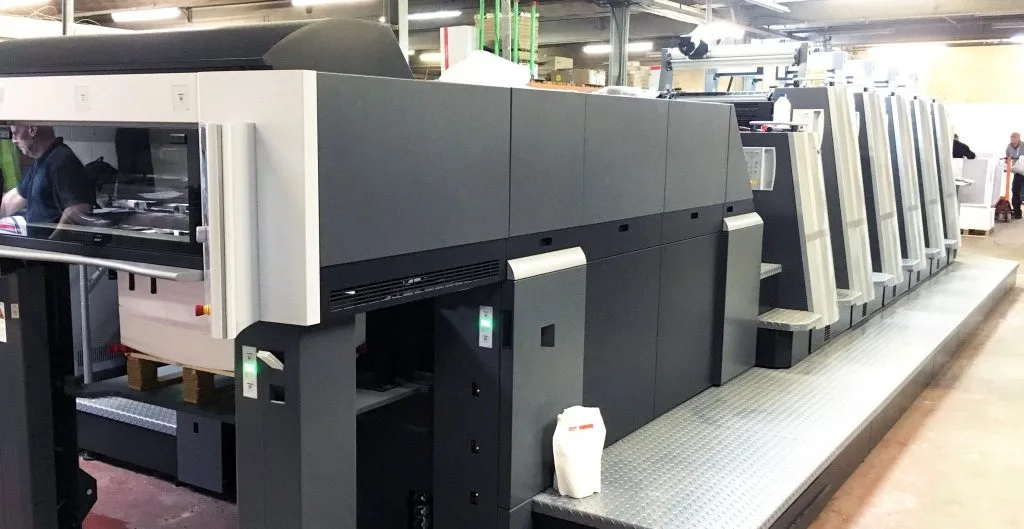
We plan page count, paper, cover and binding together, then print on B2 Heidelberg litho or Versafire digital presses at our Keighley site.
Explore the serviceWiro, case binding and drilled documents
| Method | Choose it when | Watch out for |
|---|---|---|
| Wiro / wire-o | The document must lie flat or fold back on itself: manuals, cookbooks, desk calendars, training packs | No printable spine; the wire needs a margin along the bound edge |
| Case binding | You want a hardback that lasts: anniversary books, high-value presentation pieces | Longest lead time and highest unit cost |
| Drilled and loose-leaf | Pages go into a ring binder or are updated individually | Hole positions must be planned into the artwork margin |
We drill 2–4 holes in-house for ring-binder documents. For wiro and case-bound work, tell us the specification and we will advise on the options and lead times.
How to choose a binding
- 1
Count the pages
A short book in multiples of four suits saddle stitching. A long book on heavier paper needs a spine.
- 2
Think about how it will be used
A brochure read once suits saddle stitch; a catalogue kept for months may justify PUR; a manual used at a desk suits wiro.
- 3
Decide if the spine matters
A printed spine helps on shelves and gives a more book-like feel. Only perfect and case binding provide one.
- 4
Consider postage
For mailed brochures, weight and thickness decide the Royal Mail format. See our envelope sizes guide.
- 5
Plan the cover and finish
A heavier laminated cover protects the book. See print finishes.
| Job | Usual choice |
|---|---|
| 16-page event programme | Saddle stitch |
| 32-page product brochure | Saddle stitch, separate heavier cover |
| 100-page catalogue | PUR perfect binding |
| Staff handbook updated regularly | Drilled, loose-leaf in a binder |
| Recipe book or desk manual | Wiro |
| Company anniversary book | Case binding |
If you are still deciding between print and a PDF, see printed vs digital brochures.