Quick answer
Print finishes are treatments applied after the ink goes down to change how a piece looks, feels and wears. The main ones are lamination (a thin film over the whole sheet, in gloss, matt/silk or soft-touch), spot UV (a high-gloss varnish on chosen areas only, usually over matt or soft-touch lamination for contrast), foil blocking (metallic or coloured foil pressed on with a heated die), and embossing and debossing (raising or pressing the board with a die). A press varnish or aqueous coating applied in line on the press is the lightest option. The right finish depends on what the piece needs to do: protect a cover, highlight a logo, or make a business card feel substantial.
Key takeaways
- Lamination covers the whole sheet; it cannot be applied to selected areas. Spot UV, foil and embossing are applied to chosen areas.
- Spot UV works best over matt or soft-touch lamination, where the contrast between gloss and matt does the work.
- Each spot finish needs its own artwork: a separate layer or file showing exactly where the varnish, foil or emboss goes.
- Laminated and heavy sheets should be creased before folding, or the film and fibres can crack along the fold.
- Finishes add non-paper material. UK paper industry guidance suggests keeping laminates, coatings, inks, varnishes and adhesives to no more than 10% of a pack's weight for recyclability.
Print finishes at a glance
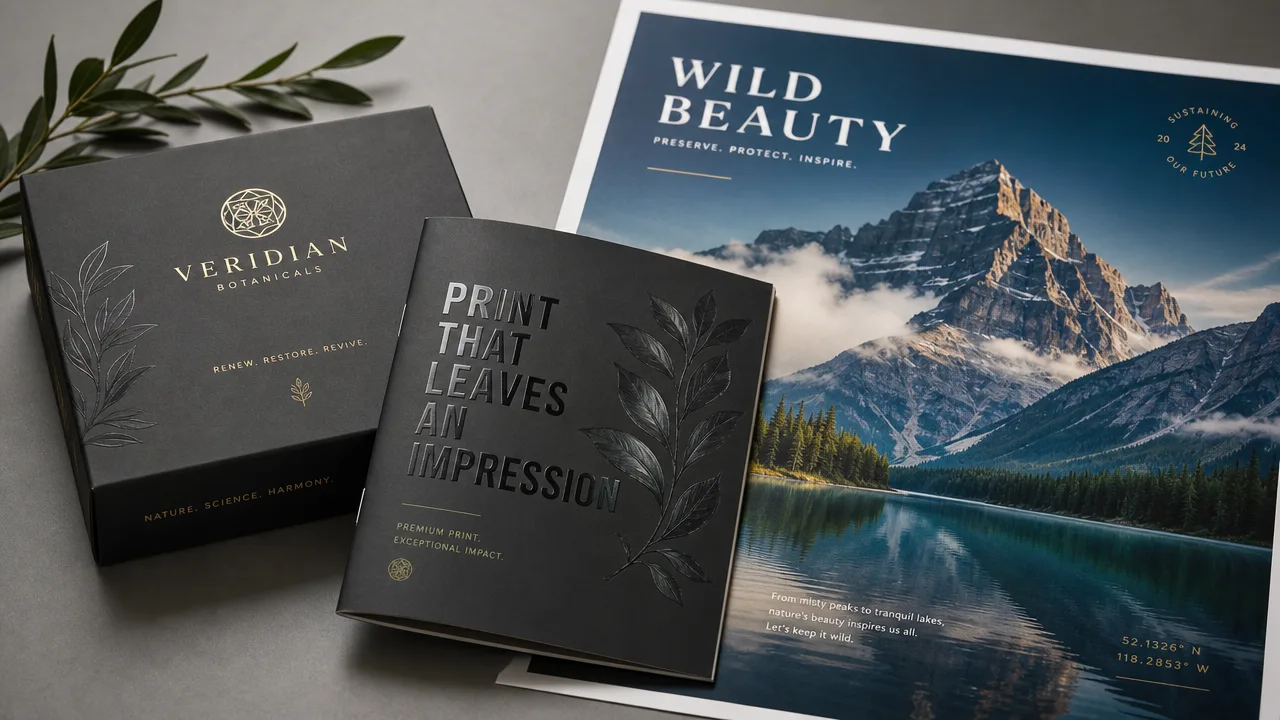
Most finishes fall into two groups. Whole-sheet finishes (lamination and press coatings) protect the print and set its overall feel. Spot finishes (spot UV, foil, embossing and debossing) pick out a logo, headline or image. Many premium pieces combine one of each: a soft-touch laminated cover with a spot UV logo, for example.
| Finish | What it is | Best for | Things to watch |
|---|---|---|---|
| Gloss lamination | Clear, shiny film bonded to the whole sheet | Covers, menus and covers that need wiping clean; bright colour | Shows fingerprints and glare; can crack on folds unless creased |
| Matt or silk lamination | Low-sheen film over the whole sheet | Brochure and report covers, folders, text-heavy pieces | Darker colours can look slightly muted; base for spot UV |
| Soft-touch lamination | Velvety matt film with a tactile surface | Business cards, luxury brochures, packaging | Can mark more easily than gloss; usually the most expensive laminate |
| Press varnish / aqueous coating | Thin coating applied on the press, in line, after the inks | Protecting long litho runs, leaflets, mailing items | Less protection than film; flood (all-over) rather than precise spot work |
| Spot UV | High-gloss varnish cured with UV light on chosen areas only | Logos, headlines and images on matt or soft-touch covers | Needs a separate artwork layer; less effective on uncoated paper, which absorbs it |
| Foil blocking | Metallic or coloured foil transferred by a heated die | Logos, brand marks, invitations, gift packaging | Fine detail and very small text can fill in; a die is made for each design |
| Embossing / debossing | A die raises (emboss) or presses in (deboss) the board | Minimal, tactile designs; stationery; packaging | Needs a thick enough stock; affects the reverse side of the sheet |
| Duplex board | Two sheets laminated together for extra thickness | Premium business cards | Edges can be coloured; a thicker card needs scoring to fold |
Lamination: gloss, silk and soft-touch
Lamination bonds a thin plastic film to the printed sheet with heat and pressure. It makes the piece harder to tear and water-resistant, and it protects covers that will be handled a lot. Unlike varnish, lamination can only be applied to the whole sheet, not to selected areas. We laminate in gloss, silk and soft-touch in-house.
| Laminate | Look and feel | Typical uses |
|---|---|---|
| Gloss | Shiny, makes colour and photographs look brighter | Menus, covers that are wiped down, product photography |
| Silk / matt | Low sheen, smooth, easier to read under light | Corporate brochures, annual reports, presentation folders |
| Soft-touch | Velvety, tactile, very low sheen | Business cards, luxury brochures, gift and retail packaging |
Laminated sheets need creasing before folding
A laminated cover or a heavy board folded without a crease can crack along the fold, showing white fibres through the film and ink. Tell us where the folds are and we will score or crease the sheet first. Our folders have inline scoring and perforating for this.
Paper choice matters too. Laminating an uncoated stock removes its natural texture, so if you want a tactile uncoated feel, consider a lighter press coating instead. See silk vs gloss vs uncoated paper for how the base stock affects the finish.
Spot UV printing
Spot UV is a clear, high-gloss varnish applied only to selected areas and cured almost instantly under ultraviolet light. Its effect comes from contrast: a glossy logo on a matt or soft-touch background catches the light as the piece is turned. For that reason it is usually applied over matt or soft-touch lamination rather than straight onto paper.
| Use spot UV for | Avoid spot UV for |
|---|---|
| Logos and brand marks on covers and business cards | Large areas of fine body text |
| Headlines or a single hero image | Uncoated stock without lamination (the varnish soaks in) |
| Patterns that only show when the light catches them | Areas that will be folded or creased |
Spot UV is supplied as a separate artwork layer or file: solid black (100% K) wherever the varnish should go, exactly aligned with the print. Keep it slightly away from very fine detail, as the varnish and the print are applied in different passes. Our guide to setting up artwork for print covers how to supply finish layers.
Spot UV vs a press varnish
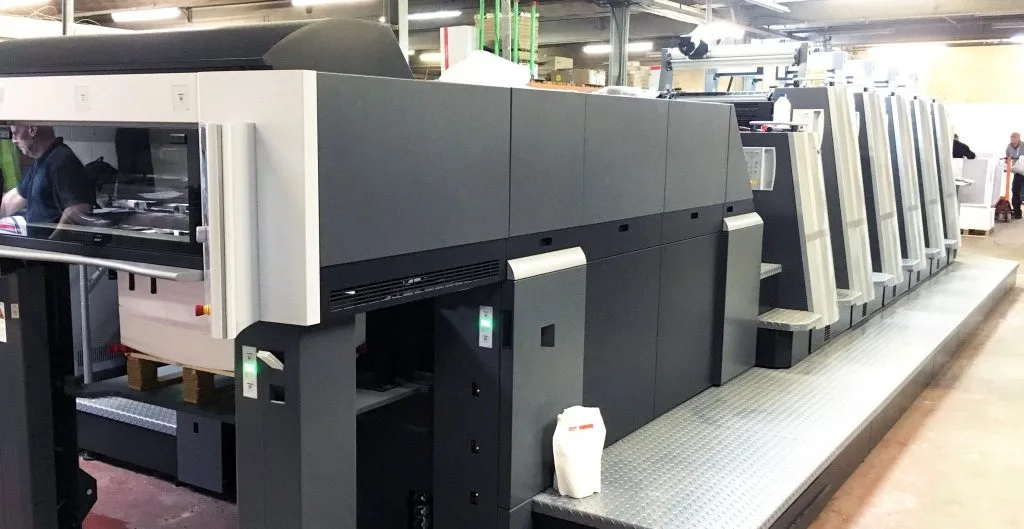
Both our B2 Heidelberg litho presses have an inline coater, which applies an all-over coating or varnish as the sheet is printed. This protects the print and speeds up drying. Spot UV is a separate, higher-gloss process for selected areas.
Foil blocking, embossing and debossing
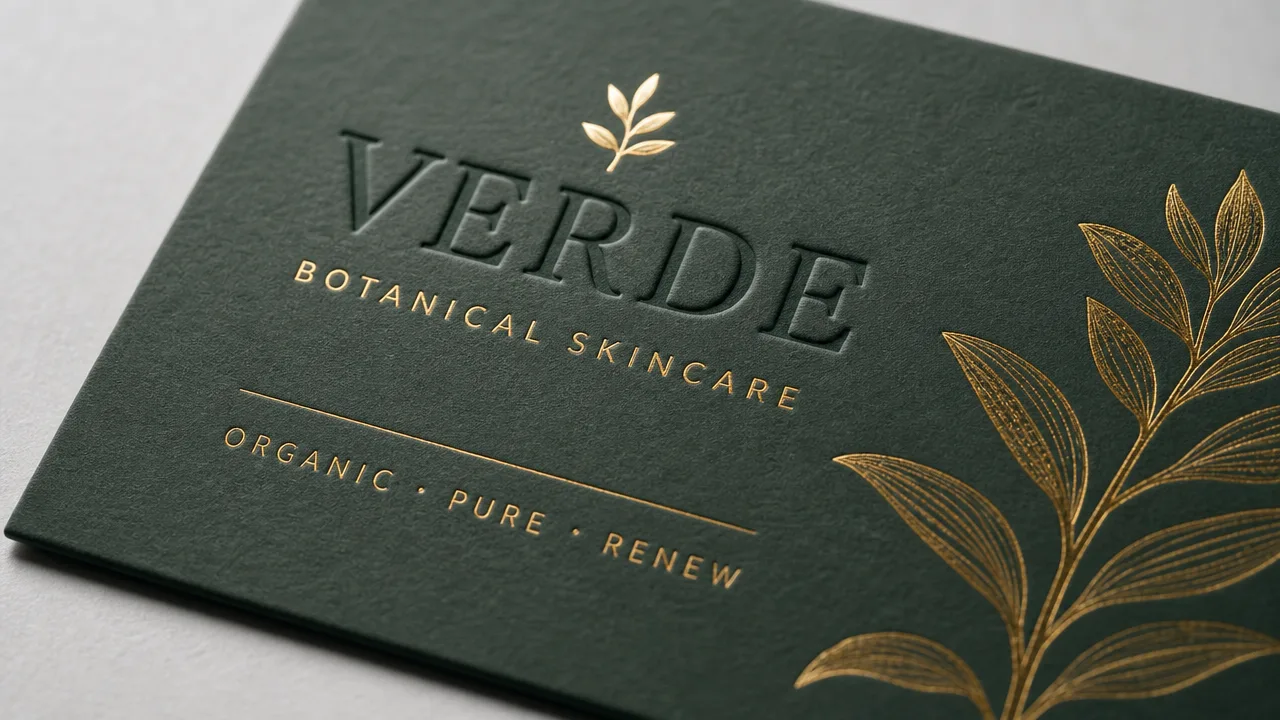
Foil blocking (also called hot foil stamping) uses a heated metal die to transfer metallic or pigmented foil onto the sheet. We block in gold, silver and custom foil colours. Foil is far more reflective than metallic ink, which makes it the usual choice for logos on stationery, invitations and gift packaging.
Embossing presses the board between a male and female die to raise part of the design. Debossing does the opposite, pressing the design into the surface. Blind embossing or debossing uses no ink or foil, so the design shows only as texture. Both can be combined with foil or spot UV.
| Embossing | Debossing | Foil blocking | |
|---|---|---|---|
| Effect | Raised design | Recessed design | Metallic or coloured shine |
| Colour | Optional (blind, printed or foiled) | Optional (blind, printed or foiled) | Foil colour (gold, silver, custom) |
| Works best on | Thicker board and uncoated or soft-touch stocks | Thicker board and business cards | Smooth, coated or laminated surfaces |
| Reverse of sheet | Shows a recess | Shows a raised area | Unaffected |
| Tooling | Matched dies | Die | Heated die |
Business cards and stationery with premium finishes
Soft-touch, foil, spot UV, embossing and 450gsm duplex cards, printed and finished in-house in Keighley and colour-matched across your whole stationery suite.
Explore the serviceFor packaging, finishes go further: die-cut windows, foil and embossing on rigid and folding cartons. See our packaging page for examples.
Choosing a finish: cost, timing and sustainability
- 1
Start with the job the piece has to do
A cover that will be handled for a year needs lamination. A leaflet that will be read once may need only a press coating. A card meant to impress may justify foil or soft-touch.
- 2
Pick the paper and weight together
Embossing needs a thick enough board; spot UV needs a sealed surface. See our paper weight and GSM guide.
- 3
Allow time
Specialist finishes add steps after printing. On our stationery, digital work is typically ready in 2-5 working days from artwork approval, and litho or specially finished items in 5-10 working days.
- 4
Plan the binding
Lamination and heavy covers affect how a book opens and how the spine is formed. See binding methods.
- 5
Think about recycling
Plastic laminates add non-paper material. The Confederation of Paper Industries' Design for Recyclability Guidelines recommend keeping laminates, coatings, inks, varnishes and adhesives to no more than 10% of a pack's weight.
| If you want… | Consider |
|---|---|
| Protection at the lowest cost | Inline press coating or varnish |
| A durable, wipeable cover | Gloss or silk lamination |
| A premium, tactile feel | Soft-touch lamination, duplex board or blind embossing |
| A logo that catches the eye | Spot UV over matt/soft-touch, or foil blocking |
| A more recyclable piece | Uncoated or coated paper with a press coating rather than plastic film |