Quick answer
The main UK envelope sizes are C4 (229 × 324mm) for unfolded A4, C5 (162 × 229mm) for A4 folded once or flat A5, DL (110 × 220mm) for A4 folded into thirds, and C6 (114 × 162mm) for A4 folded twice or flat A6. The sizes come from the international standard ISO 269. For postage, C6, DL, C6/C5 and C5 envelopes fit Royal Mail's Letter format (up to 240 × 165 × 5mm and 100g). C4 and B4 envelopes are Large Letters (up to 353 × 250 × 25mm and 750g), which cost more to post.
Key takeaways
- C-series envelopes are sized to hold the matching A-series paper: C4 takes A4 flat, C5 takes A5 flat, C6 takes A6 flat.
- DL (110 × 220mm) is the classic business envelope for an A4 letter folded into thirds.
- Royal Mail's Letter format is up to 240 × 165mm, 5mm thick and 100g. C5, DL and C6 all fit when the contents stay within the thickness and weight.
- C4 and B4 envelopes are Large Letters. At Royal Mail's 2026 standard tariff, a 2nd Class Advertising Mail Large Letter up to 100g cost 104.0p against 74.0p for a Letter.
- For machine-sorted Mailmark letters, windows must sit at least 15mm from the top, left and right edges and 18mm from the bottom, and take up no more than 50% of the front.
Envelope size chart
Envelope sizes are set by the international standard ISO 269, which is designed to work with ISO 216 paper sizes (A4, A5 and so on). The C series matches the A series exactly, so a C5 envelope holds an A5 sheet flat. The table below shows the sizes you are most likely to use for business mail.
| Envelope | Size (mm) | Size (inches) | Holds | Royal Mail format |
|---|---|---|---|---|
| C3 | 324 × 458 | 12.8 × 18.0 | A3 flat, A2 folded once | Parcel (larger than a Large Letter) |
| B4 | 250 × 353 | 9.8 × 13.9 | Bulky A4 documents, catalogues and reports | Large Letter (at the maximum size) |
| C4 | 229 × 324 | 9.0 × 12.8 | A4 flat, A3 folded once | Large Letter |
| B5 | 176 × 250 | 6.9 × 9.8 | Bulky A5 documents and booklets | Large Letter |
| C5 | 162 × 229 | 6.4 × 9.0 | A5 flat, A4 folded once | Letter |
| C6/C5 (DL+) | 114 × 229 | 4.5 × 9.0 | A4 folded into thirds, with extra room for inserts | Letter |
| DL | 110 × 220 | 4.3 × 8.7 | A4 folded into thirds, DL leaflets and compliment slips | Letter |
| B6 | 125 × 176 | 4.9 × 6.9 | Cards and bulky C6 contents | Letter |
| C6 | 114 × 162 | 4.5 × 6.4 | A6 flat, A4 folded twice, A5 folded once | Letter |
| C7 | 81 × 114 | 3.2 × 4.5 | A7 flat, small cards and tickets | Too small for Mailmark machine letters (minimum 140 × 90mm) |
What size envelope do I need for A4?
Use C4 to send A4 flat, C5 if you fold A4 once, and DL if you fold A4 into thirds. DL is the most common choice for letters and statements. C4 is best for documents that should not be creased, such as certificates and brochures.
How envelope size affects postage
Royal Mail prices business mail by format first, then by weight. The envelope size decides the format, but thickness and weight count too: a C5 envelope stuffed to 8mm thick is a Large Letter, not a Letter.
| Royal Mail format | Maximum length | Maximum width | Maximum thickness | Maximum weight | Envelopes that fit |
|---|---|---|---|---|---|
| Letter | 240mm | 165mm | 5mm | 100g | C6, DL, C6/C5, C5, B6 |
| Large Letter | 353mm | 250mm | 25mm | 750g | B5, C4, B4 |
| Large Letter (machine-readable) | 345mm | 245mm | 10mm | 750g | B5, C4 (B4 is too large) |
| Parcel | Larger than a Large Letter | Larger than a Large Letter | Over 25mm | Up to 2kg | C3 and larger |
The difference in price is significant. In Royal Mail's April 2026 price guide, a 2nd Class Advertising Mail item up to 100g at the standard tariff cost 74.0p as a Letter and 104.0p as a Large Letter. Sorted and Mailmark options are cheaper, but the gap between formats remains. That is why most bulk mailings use DL or C5 envelopes and fold A4 to fit. See how much direct mail costs and Royal Mail Advertising Mail explained for the full pricing picture.
Check thickness as well as size
A booklet, reply envelope and letter in a C5 can easily pass 5mm. Weigh and measure a fully enclosed sample before you sign off the format, or ask your mailing house to do it for you.
Window envelopes and address position
Window envelopes save printing the address on the outside. The address is printed on the letter and shows through the window. That keeps the letter and envelope matched automatically, which matters for personalised mail. For letters sorted by machine using Royal Mail Mailmark, the window and address must follow Royal Mail's specification:
- Front windows must be at least 15mm from the top, left and right edges and 18mm from the bottom edge.
- Windows must take up no more than 50% of the front of the envelope, with no more than two windows on the front.
- Windows should be rectangular with rounded corners, or circular and no more than 85mm across.
- The delivery address must sit below and to the left of the postage indicia, and stay out of the top 40mm on a landscape letter.
- Leave a clear zone of at least 5mm around the address block, free of other text, patterns or graphics.
- The address and Mailmark barcode must stay visible in the window even when the contents move. Royal Mail limits how far the largest insert can slide: no more than 20mm for letters 2–5mm thick.
- Envelopes must be paper, at least 70gsm.
The window is fixed by the envelope, so the address position on the letter has to be set up to match it. Agree the envelope before you design the letter, and check the address is fully visible on a printed, folded and enclosed proof. Our Mailmark guide explains how the barcode and address block work together.
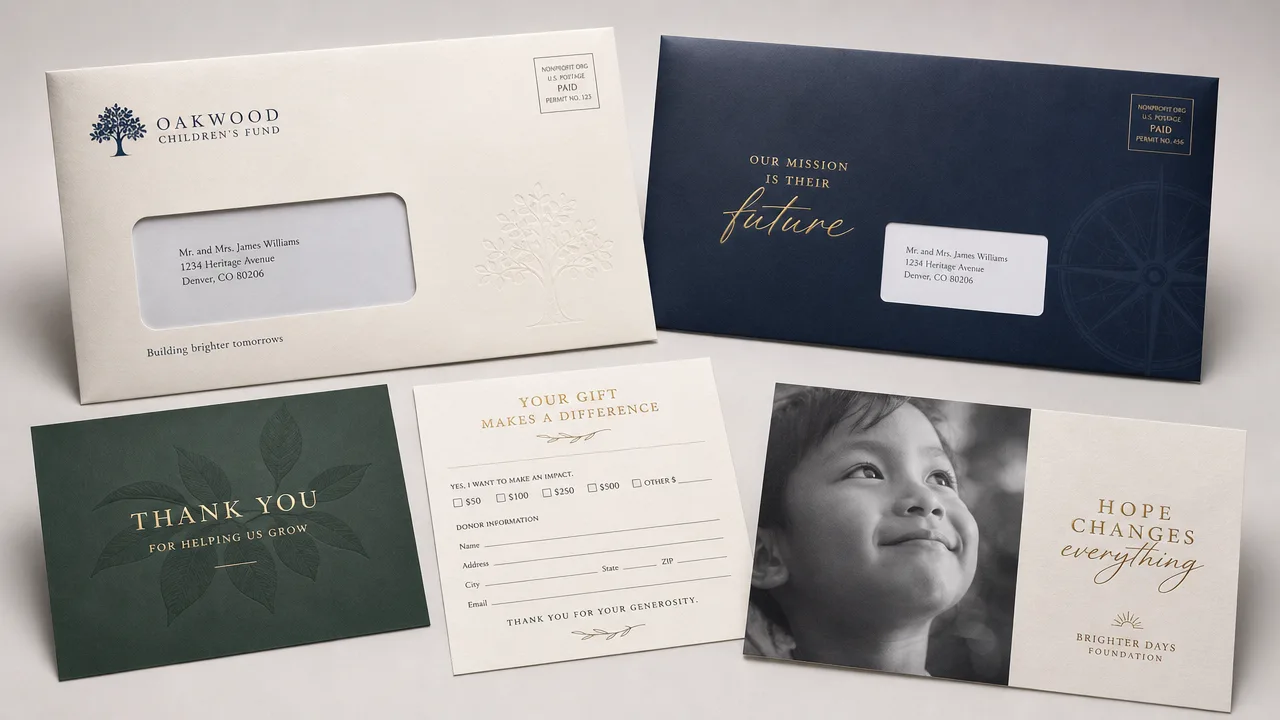
Envelopes printed, filled and posted in one place
We print personalised letters and envelopes, enclose them on camera-verified lines and sort them for Royal Mail Mailmark discounts.
Explore the serviceChoosing an envelope for a mailing
- 1
Start with the contents
List every item going in: letter, leaflet, reply envelope, card. The largest item sets the minimum envelope size; the total sets the thickness and weight.
- 2
Stay in the Letter format where you can
Folding A4 into a DL or C5 keeps most packs within 240 × 165 × 5mm and 100g, the cheapest Royal Mail format.
- 3
Allow room to enclose
Machine enclosing needs some clearance between the contents and the envelope. Too tight and packs jam; too loose and inserts slide out of the window. The C6/C5 size gives a little more room than DL for multi-item packs.
- 4
Decide on windows
Use a window envelope when the letter is personalised, so the address and contents always match. Use a plain envelope with a printed address when the outer needs to be fully branded.
- 5
Brand the outer
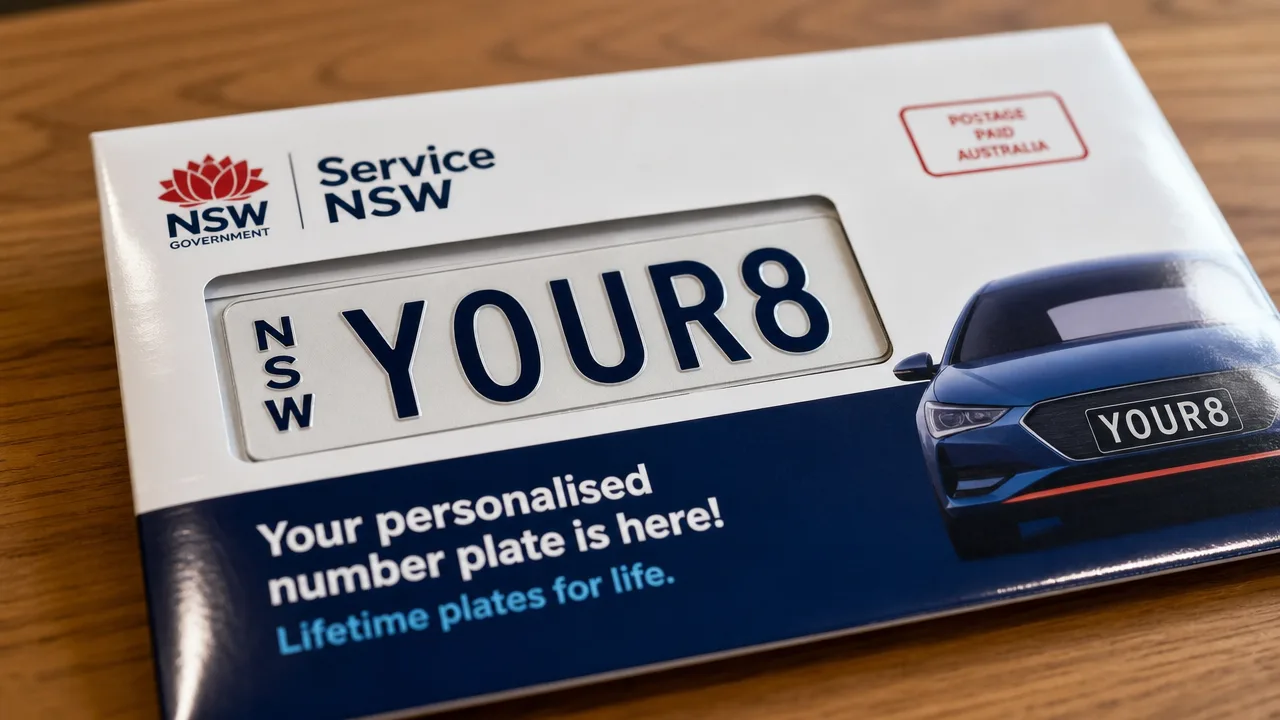
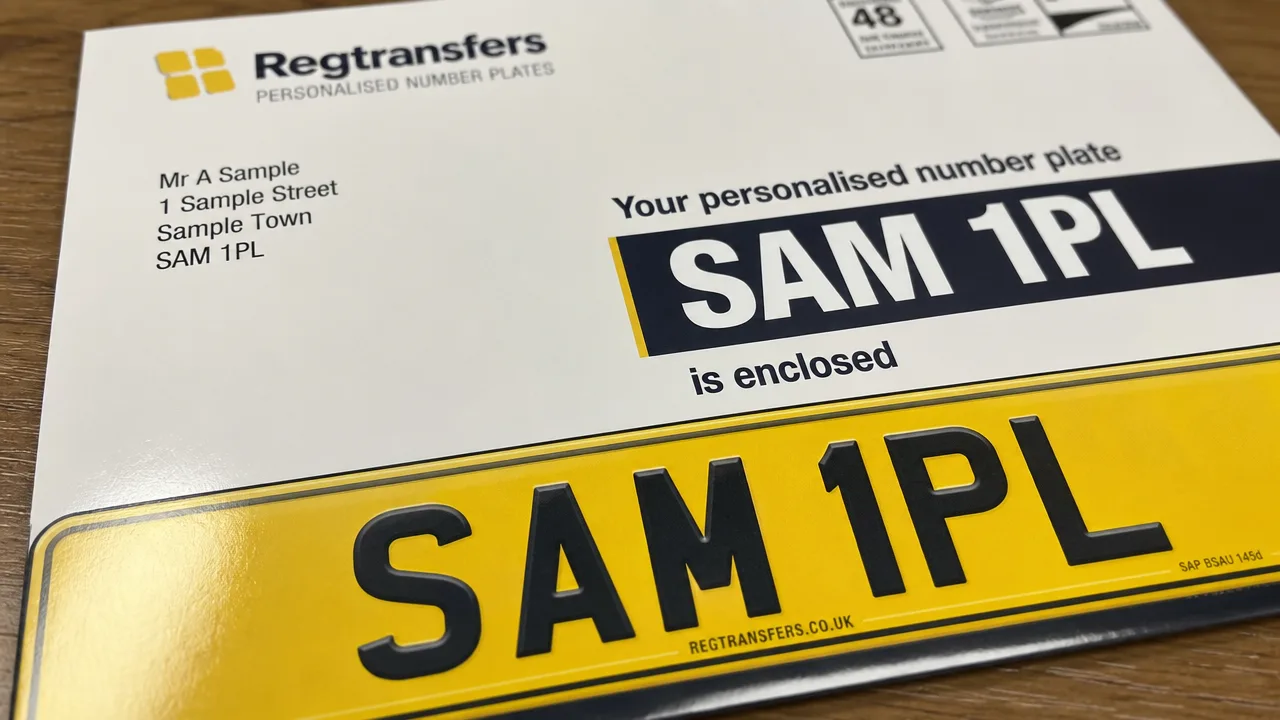
A printed message or image on the envelope can tease the contents. Keep the design clear of the address area, indicia and barcode zones.
- 6
Test a sample
Before the full run, weigh and measure a fully assembled pack and check the address shows through the window.
Choosing the format itself, letter, postcard or self-mailer, is covered in letter vs postcard vs self-mailer. If you want someone to handle the whole job, see what a mailing house does.