Quick answer
A PDF or digital brochure is cheap to distribute, easy to update and can be shared instantly, but it is one more file on a busy screen. A printed brochure costs more per copy, yet it is easier to read in depth, stays on desks and coffee tables, and signals quality. Research shows people understand informational text better on paper than on screen. Most organisations need both: a printed brochure for prospects, events and mailings, and a PDF for the website and email.
Key takeaways
- Two meta-analyses (Delgado et al., 2018; Clinton, 2019) found better comprehension of informational text on paper than on screens.
- Printed brochures have a physical presence and a long life. Mail items stay in UK homes for about a week (JICMAIL).
- PDFs win on cost of distribution, speed and ease of updating.
- 63% of European consumers prefer to read books in print and 48% prefer printed magazines (Two Sides, 2025).
- Short-run digital printing makes it affordable to print smaller quantities and update brochures more often.
Printed vs digital brochures at a glance
| Factor | Printed brochure | PDF / digital brochure |
|---|---|---|
| Reading and understanding | Better comprehension of informational text on paper (meta-analyses) | Comprehension of informational text tends to be lower on screen |
| First impression | Paper, finish and weight signal quality | Depends on screen and device |
| Lifespan | Kept on desks and shelves and passed around | Often downloaded once and forgotten |
| Cost | Print cost per copy; postage if mailed | Design only; free to share |
| Updating | Reprint needed (short digital runs keep this affordable) | Instant |
| Distribution | Mail, events, showrooms, sales meetings | Website, email, social |
| Measurement | QR codes, URLs, codes | Downloads, clicks, time on page |
What the research says about reading on paper
Brochures are usually informational: they explain products, services or a cause. That is exactly where research finds paper performs best.
- Delgado et al. (2018), a meta-analysis of studies involving 171,055 participants, found reading comprehension was better on paper than on screens, and the advantage grew when readers were under time pressure.
- Clinton (2019), a meta-analysis of 33 studies, found reading from screens had a negative effect on performance compared with paper, especially for expository (informational) text, while there was no difference for narrative text. Readers were also better at judging their own understanding on paper.
Preferences point the same way. Two Sides' 2025 survey of 12,400 European consumers found 63% prefer to read books in print and 48% prefer printed magazines.
When a printed brochure is worth it
- High-value or considered purchases, where buyers compare options carefully: property, travel, education, B2B equipment, financial products.
- Sales meetings, exhibitions and showrooms, where something to leave behind keeps you front of mind.
- Direct mail: a brochure in the post stays in the home and gets picked up again and again.
- Brand-led businesses, where paper stock, finishes and binding express quality.
- Audiences who prefer print, including many older customers and supporters.
When a PDF brochure makes sense
- Content changes often, such as price lists and spec sheets.
- You need to share instantly by email or on the website.
- The audience is international or spread out, and posting would be expensive.
- You want to track downloads and clicks.
Tip
Design once, use twice. Set up your brochure artwork for print (CMYK, 3mm bleed) and export a separate web-optimised PDF from the same file, so both versions stay consistent.
Keeping printed brochures affordable
- Print shorter runs more often on digital presses, so you are never stuck with out-of-date stock.
- Use litho for larger quantities, where the cost per copy falls. See litho vs digital printing.
- Choose a standard format such as A4 or A5 to make efficient use of the press sheet.
- Pick the right binding: saddle stitching for thinner brochures, PUR perfect binding for thicker ones.
- Think about postage if you plan to mail it. Weight and thickness decide the Royal Mail band.
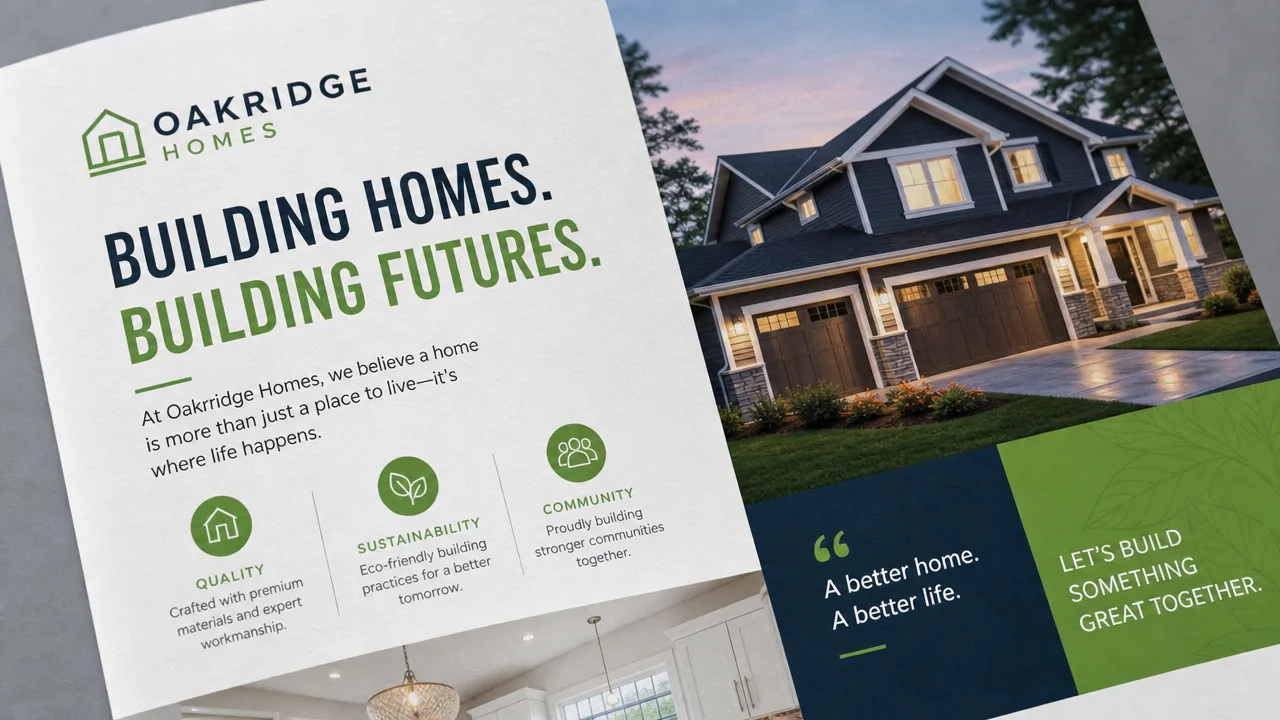
Brochure printing in-house
Saddle-stitched or PUR perfect-bound brochures on FSC-certified stock, with lamination, spot UV and foil finishes.
Explore the service