Quick answer
Direct mail does have a carbon footprint, and per item it is usually larger than a single email's. A 2023 life cycle assessment for Royal Mail Marketreach, carried out by WSP, put a standard postcard at 43.61g CO2e across its whole life, from forest to recycling bin. Mike Berners-Lee's revised estimates put a single email at anywhere from 0.03g to 26g CO2e, depending on its size and how it is read. So mail is not the low-carbon channel per message. It can be a responsible one: paper is renewable and widely recycled, and most of a mailing's footprint comes from choices you control (format, weight, ink and, above all, how many pieces you send to people who will never read them). Mail that is well targeted, right-sized and recyclable is far easier to defend than a large, untargeted drop.
Key takeaways
- WSP's 2023 life cycle assessment for Marketreach put a standard postcard at 43.61g CO2e and a large A4 or C5 catalogue at 445.29g CO2e, from raw materials to end of life.
- Royal Mail Wholesale's published carbon value for delivering a letter in 2024/25 was 19g CO2e, down from 22g the year before. That covers the postal network, not the paper or printing.
- Email is not carbon-free, but a short email is a fraction of a gram. Comparisons that pit a postcard against a 50g 'email with a large attachment' flatter mail.
- Size and weight drive the footprint. Marketreach reports that moving a four-page item from A5 to A4 increases its emissions by 42%.
- The biggest waste is mail that should never have been sent. Cleaning and targeting the list cuts print, postage and carbon at the same time.
Is direct mail sustainable?
It depends what you compare it with and how the mailing is put together. A printed piece uses paper, energy, ink and transport, and it physically travels to someone's door. An email uses electricity in data centres, networks and devices. Neither is free of impact, and anyone who tells you one channel is simply 'green' and the other 'dirty' is selling something.
What can be said with evidence is this: per item, a printed mailing usually has a higher carbon footprint than a single email. Paper, though, is made from a renewable material, it is widely recycled in the UK, and most of a mailing's footprint is set by decisions made before anything is printed. That is where a responsible mailer, and a responsible mailing house, can make a real difference.
This guide looks at the carbon numbers that stand up to scrutiny, where they are contested, and the practical choices that reduce the environmental impact of a campaign. For paper sourcing and certification, see our guides to sustainable printing and FSC-certified paper.
The carbon footprint of a direct mail piece
The most thorough UK study to date is a carbon life cycle assessment commissioned by Royal Mail Marketreach and carried out by the consultancy WSP, published in April 2023. It modelled ten common mail formats from raw materials through design, printing, delivery and end of life, assuming print runs of 500 or 1,000 pieces.
43.61g
CO2e for a standard postcard across its full life cycle
Source: WSP for Royal Mail Marketreach, 2023
445.29g
CO2e for a large A4 or C5 catalogue across its full life cycle
Source: WSP for Royal Mail Marketreach, 2023
19g
CO2e per letter for Royal Mail Wholesale delivery in 2024/25 (22g in 2023/24)
Source: Royal Mail Wholesale, June 2025
42%
Increase in emissions for a four-page item moving from A5 to A4
Source: Royal Mail Marketreach
Two things stand out. First, the range is wide: a large catalogue has roughly ten times the footprint of a postcard, so 'the carbon footprint of direct mail' is not one number. For a postcard, Marketreach reports that delivery is the largest single contributor and design the smallest. Second, size has more effect than page count. Going up a paper size adds more emissions than adding pages at the same size.
What the Royal Mail figure does and does not cover
Royal Mail Wholesale's 19g per letter covers its own operations (Scope 1 and 2 emissions) plus upstream domestic transport, with emissions split between letters and parcels by revenue share. It does not include making the paper, printing or recycling. That is why it is lower than the full life cycle figures above.
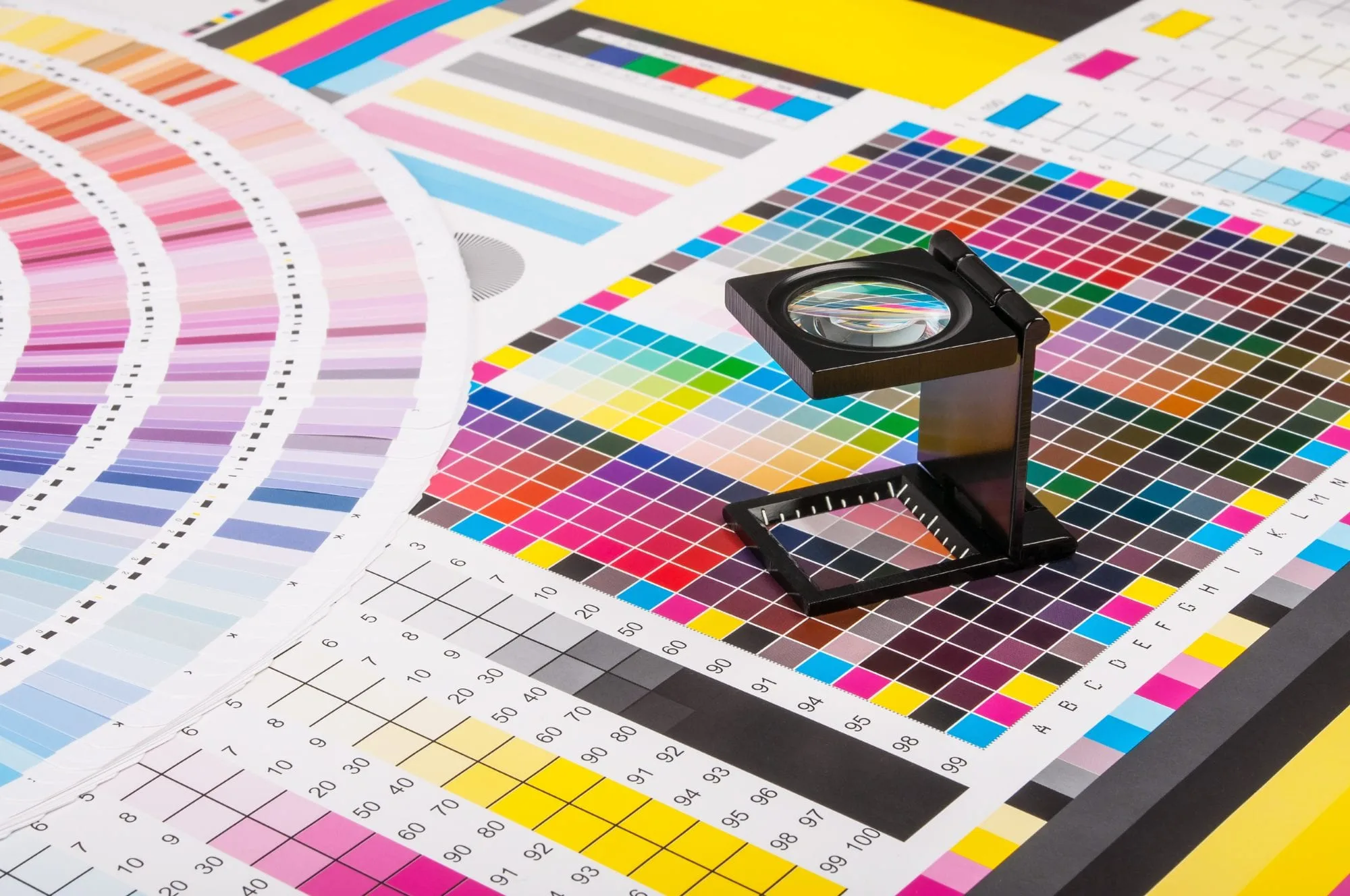
Direct mail, planned to waste less
Format, print, data, enclosing and Mailmark sortation under one roof in Keighley, so the whole pack is specified together.
Explore the serviceDirect mail vs email: the carbon comparison
Estimates for email vary enormously because they depend on what is counted: the data centres, the networks, the device the email is read on and how long someone spends reading it. In the 2020 edition of his book How Bad Are Bananas?, Mike Berners-Lee revised his figures downwards, putting a single email at between 0.03g and 26g CO2e. The low end is spam caught by a filter; the high end is a long email that takes real reading time.
| Item | Estimated footprint | Source |
|---|---|---|
| Single email | 0.03g to 26g CO2e, depending on type and reading time | Mike Berners-Lee, How Bad Are Bananas? (2020 edition), as cited by The Open University |
| Email with a large attachment | 50g CO2e | Comparison quoted at the launch of the Marketreach study (2023) |
| Standard postcard | 43.61g CO2e, full life cycle | WSP for Royal Mail Marketreach (2023) |
| Large A4 or C5 catalogue | 445.29g CO2e, full life cycle | WSP for Royal Mail Marketreach (2023) |
Be wary of flattering comparisons
When the Marketreach study was launched, the postcard was compared with an email carrying a large attachment (50g CO2e). That is a real but unusually heavy email. Most marketing emails are much lighter, so on a like-for-like, per-message basis, email will normally have the smaller footprint. Claims that mail is 'greener than email' should be treated with caution.
Per message is not the only way to look at it. A campaign exists to produce a response, so the more useful question is the footprint per response or per sale. That depends on how well each channel performs for your audience, and on how much of each is wasted on people who never engage. We compare the two channels on response, cost and data protection in direct mail vs email marketing. Many campaigns work best when the two are combined.
Recycling and what happens after the doormat
Paper's main environmental advantage is what happens at the end. Marketreach, citing the Confederation of Paper Industries, states that more than 70% of paper fibres in the UK are recycled and can be reused up to seven times. The WSP life cycle model assumed 70.6% of mail is recycled and 29.4% goes to landfill.
That only works if the piece can actually be recycled and the recipient knows it. Heavy plastic lamination, glitter, foil-heavy finishes and plastic-windowed or polywrapped packs can make recycling harder. If sustainability matters to your audience, design the pack so it can go straight into the recycling and say so on it.
- Choose recyclable components: paper envelopes, and finishes that do not seal the sheet in plastic.
- Tell people: a short line saying the pack and envelope can be recycled removes doubt.
- Specify certified paper: FSC-certified stocks show the fibre came from responsibly managed sources. See our FSC certified paper guide.
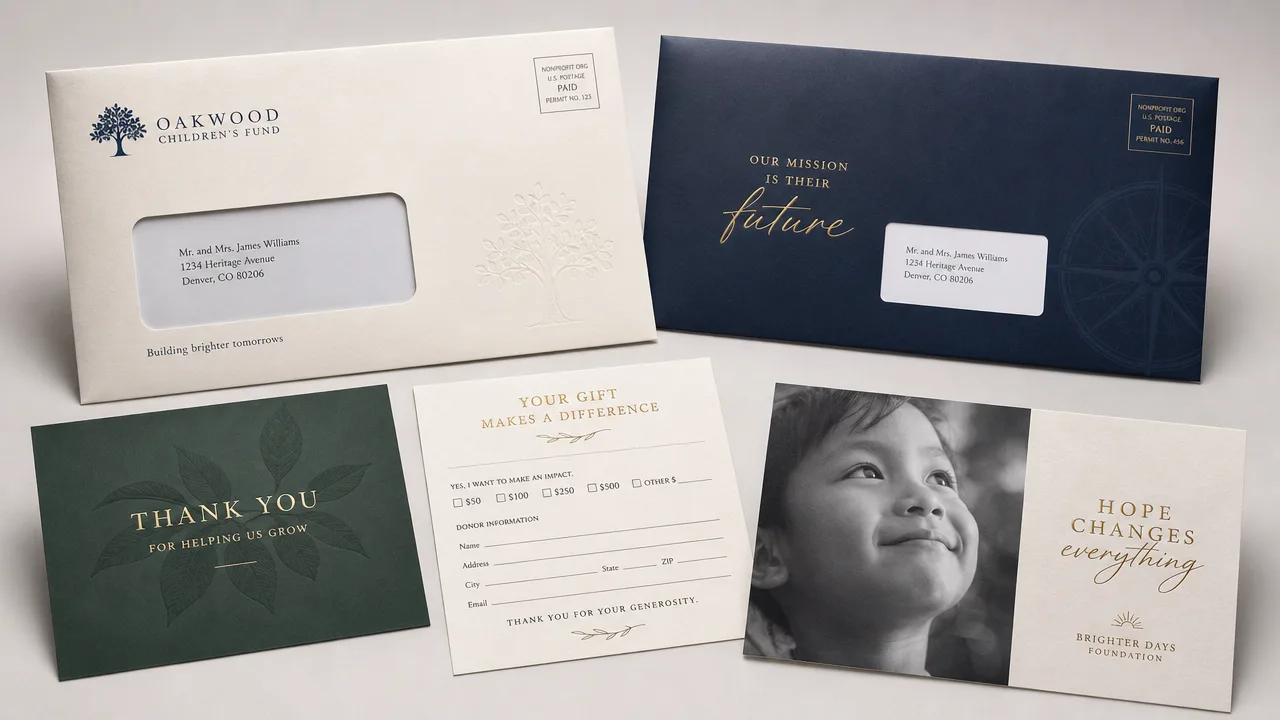
How to reduce the environmental impact of direct mail
Most of the footprint of a mailing is decided at the briefing stage. These are the levers that make the biggest difference, roughly in order of impact:
- 1
Send fewer pieces to the wrong people
Every duplicate, gone-away or unwanted pack is print, postage and carbon with no chance of a response. Screening against the Mailing Preference Service, removing duplicates and validating addresses before print is the single most effective step. See our guide to mailing data cleansing.
- 2
Target tightly
Mailing a smaller, better-chosen audience reduces the print run and delivery emissions. Marketreach recommends tighter targeting as one of its main ways to use mail more sustainably.
- 3
Right-size the format
Size matters more than page count. If an A5 piece does the job, an A4 one adds emissions without adding response. A lighter piece may also cost less to post.
- 4
Watch the paper and ink
Ask about lower-impact and certified paper options, use lighter weights where the piece still feels right, and avoid unnecessary heavy ink coverage.
- 5
Design for recycling
Avoid components that stop the pack being recycled and tell recipients it can be recycled.
- 6
Keep production together
Printing, personalising, enclosing and sorting at one site avoids moving part-finished work between suppliers.
Lower impact does not have to mean lower response. Marketreach reports that a low-impact, recyclable pack for People's Postcode Lottery produced a 57.2% increase in response rate against the lottery's previous best-performing control pack. One campaign is not proof for every brand, but it shows the two goals can work together.
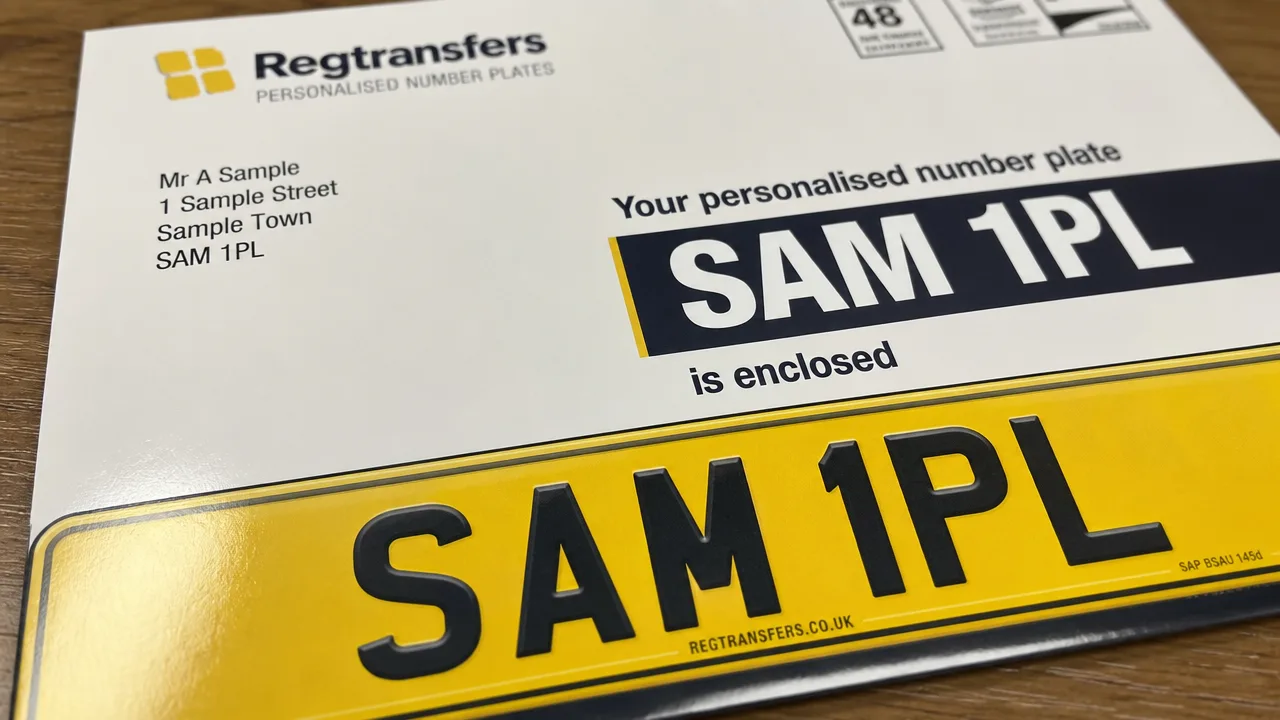
Data processing that cuts waste
PAF validation, de-duplication and MPS and gone-away suppression before a single sheet is printed.
Explore the serviceHow Fretwell manages its environmental impact
Fretwell holds ISO 14001:2015 environmental management certification. It is independently audited and means we track and work to minimise waste, energy use and emissions across production. That is useful evidence for clients who have to report on their supply chain in supplier questionnaires, annual reports or ESG frameworks.
We also hold FSC chain of custody certification, and FSC-certified stocks are available across our litho and digital ranges at no extra cost for standard weights. Recycled and uncoated stocks can be sourced on request. Our data, print, personalisation, enclosing and Mailmark sortation all happen at our Keighley site. You can see our certificates and environmental policy on our certifications page.
The verdict
Per message, email usually has the smaller carbon footprint. Direct mail's environmental case rests on renewable, widely recycled paper and on sending fewer, better-targeted pieces, so judge a campaign by its waste and its response, not by the channel alone.
- Choose direct mail if…
- the piece is well targeted, right-sized, recyclable and likely to earn a response worth its footprint.
- Choose email if…
- the message is simple, time-sensitive and the audience has opted in, so a light digital message will do the job.
Sources
- Research Live – Marketreach explores sustainability of commercial mail (27 April 2023)
- Royal Mail Marketreach – Ultimate guide to improving the sustainability of mail
- Royal Mail Marketreach – Behind the scenes of the campaign: Discover the circular advantage of mail
- Royal Mail Wholesale – Carbon values for 2024/25 (published June 2025)
- The Open University – How dirty are your digital bad habits? (Berners-Lee email estimates)