Quick answer
Variable data printing (VDP) is printing where the content changes from one copy to the next, driven by a data file. It goes well beyond the name and address: each piece can carry its own offer, image, donation amounts, QR code or version of the message. It is printed digitally, either as the whole piece or as personalisation overprinted onto litho-printed shells, and then enclosed with camera matching so each personalised item ends up in the right envelope. A 2021 WARC and Royal Mail Marketreach study found personalised direct mail is read an average of 4.5 times.
Key takeaways
- VDP changes text, images, codes or whole versions from record to record, using fields in your data file.
- Two production routes: fully digital, or litho-printed shells with the personalisation overprinted digitally. Quantity, colour and the amount of variable content decide which is cheaper.
- The data drives everything, so it must be clean, consistently formatted and agreed field by field before production.
- Proof a sample of real records, including the longest names, missing fields and every version, not just one perfect example.
- Multi-item personalised packs need camera matching at enclosing, so the letter, form and envelope for each person always go together.
What variable data printing is
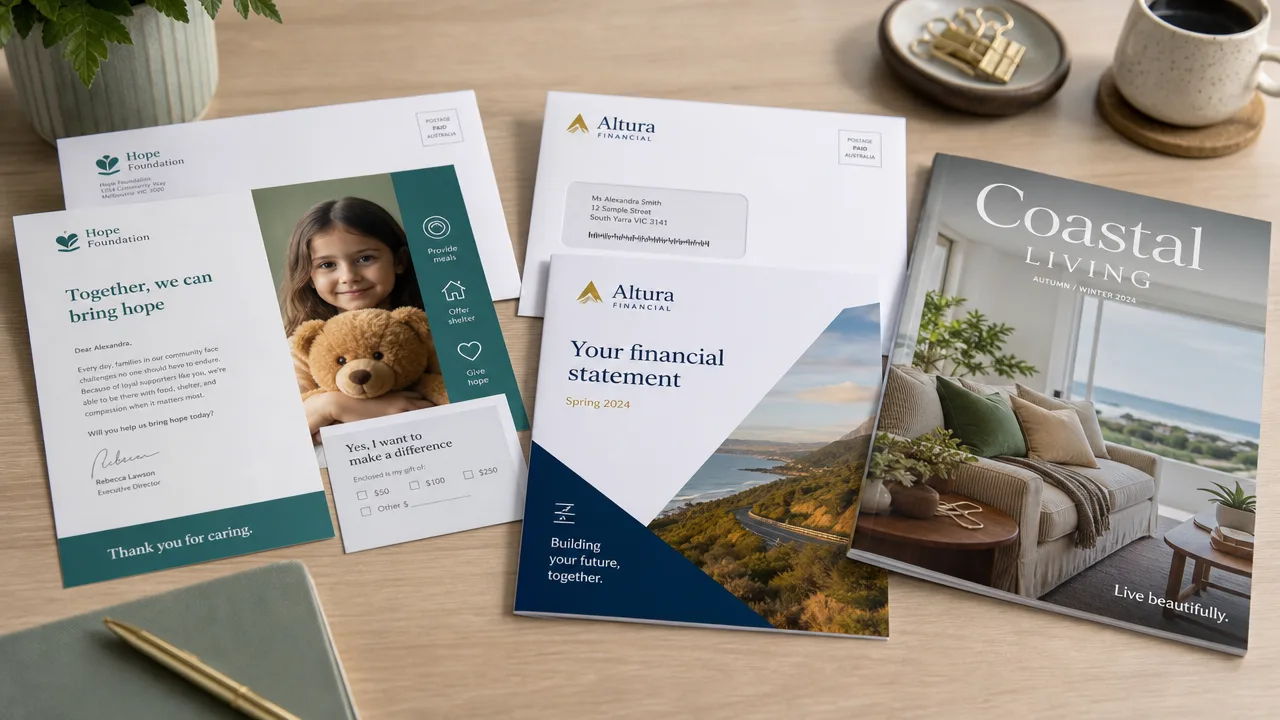
In a normal print run, every copy is identical. In a variable data run, the press is fed a data file alongside the artwork, and each copy pulls its own content from its own record. The simplest example is a letter with a personalised name and address. More useful examples change the substance of the message: a different offer for lapsed customers, a different photograph for each region, or donation amounts based on each supporter's last gift.
This is what makes direct mail a targeted channel rather than a broadcast one. WARC's 2021 analysis of effective UK campaigns that led with direct mail found personalisation was used as a creative strategy in 24% of them, more than in the average UK case study, and that personalised mail was read an average of 4.5 times.
4.5
Average number of times personalised direct mail is read
Source: WARC / Royal Mail Marketreach, 2021
24%
Effective UK direct-mail-led campaigns that used personalisation as a creative strategy
Source: WARC / Royal Mail Marketreach, 2021
What can be personalised
| Type | What changes | Example |
|---|---|---|
| Variable text | Names, salutations, account details, dates, amounts and whole paragraphs | "Dear Jane", a renewal date, or a paragraph only shown to customers who bought in the last year |
| Variable images | Photographs, product shots, maps or graphics | A picture of the nearest branch, or products matched to past purchases |
| Versioning | Whole layouts or sections switched by segment | A different cover and offer for new, active and lapsed customers |
| Codes | QR codes, unique voucher codes, reference numbers and barcodes | A QR code that opens a personalised web page (PURL) or pre-fills a form |
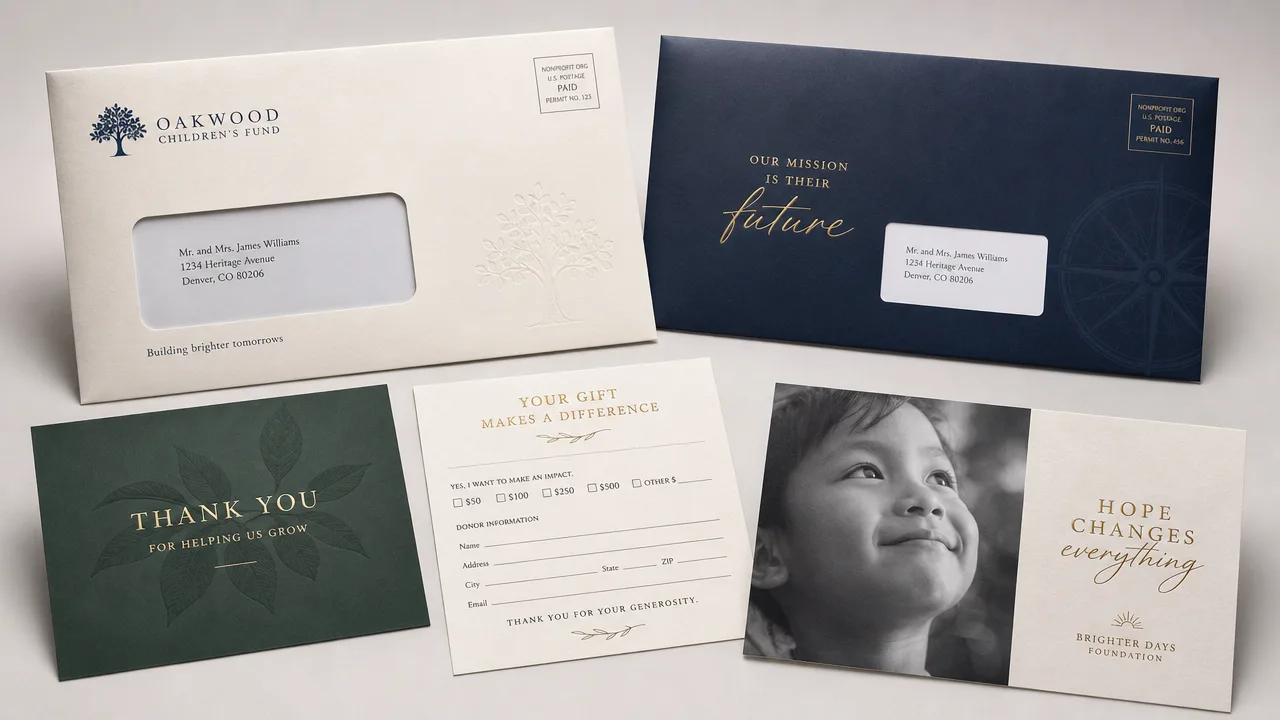
| Ask strings | Donation amounts on letters and response forms | A donor whose last gift was £15 is asked for £15, £25 or £50 instead of a generic £5, £10 or £25 |
| Addressing | Name, address and postal barcodes on the outer or carrier | A Mailmark barcode and address printed through an envelope window |
Conditional logic is what turns personalisation into relevance. Rules such as "if last gift is over £50, show the major donor paragraph" or "if no first name, use 'Dear Supporter'" are written once and applied to every record. On our charity mailings, our data team maps the ask-string logic each charity specifies and generates the variable data that drives production.
Codes connect print to digital. Unique QR codes and personalised URLs let you track responses back to individual records and send people straight to a page that already knows who they are. WARC's report notes that brands are increasingly using personalised URLs and QR codes to bridge mail and digital.
How personalised print is produced
Variable content needs a digital press or inkjet head, because litho plates cannot change between copies. There are two main routes, and the right one depends on quantity, colour and how much of the piece varies. Our litho vs digital printing guide covers the trade-off in more detail.
| Route | How it works | Best for |
|---|---|---|
| Fully digital | The whole piece, static and variable, is printed digitally in one pass | Shorter runs, lots of variable colour content, many versions |
| Litho shells + digital overprint | The static design is printed on litho in one long run, then the variable content is overprinted digitally or by inkjet | Long runs where most of the design is the same and the variable content is mainly text, mono or limited colour |
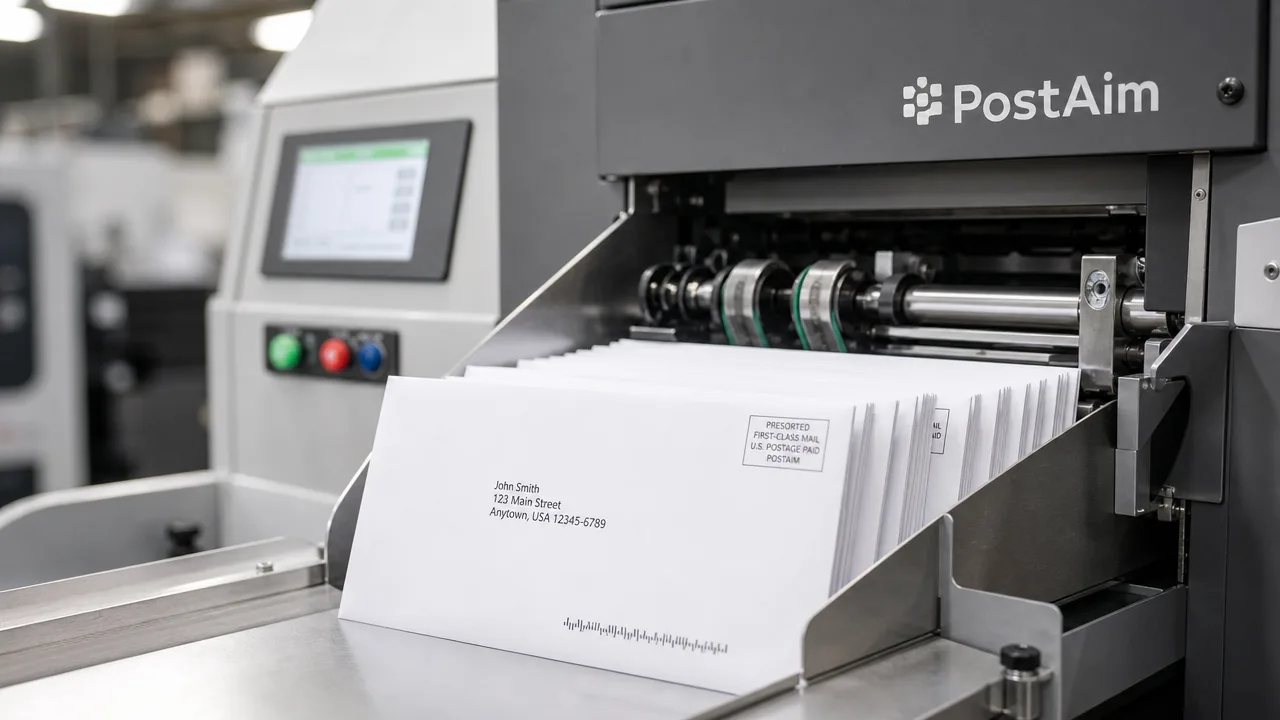
| Inkjet addressing | Addresses and barcodes printed directly onto envelopes or carriers | Outer envelopes and self-mailers |
Our personalisation floor covers both routes. Colour variable text and images run on our Heidelberg Versafire and Ricoh Pro C651EX SRA3 presses. High-volume mono personalisation runs on Konica Minolta AccurioPress 6136P and Ricoh Pro 8320 machines. Very large personalised runs go through our Kyocera TASKalfa Pro 15000c continuous-feed colour inkjet, and Astrojet 3800p printers handle outer envelope addressing and barcodes. Litho shells come from our B2 Heidelberg presses. The full list is on our plant list.
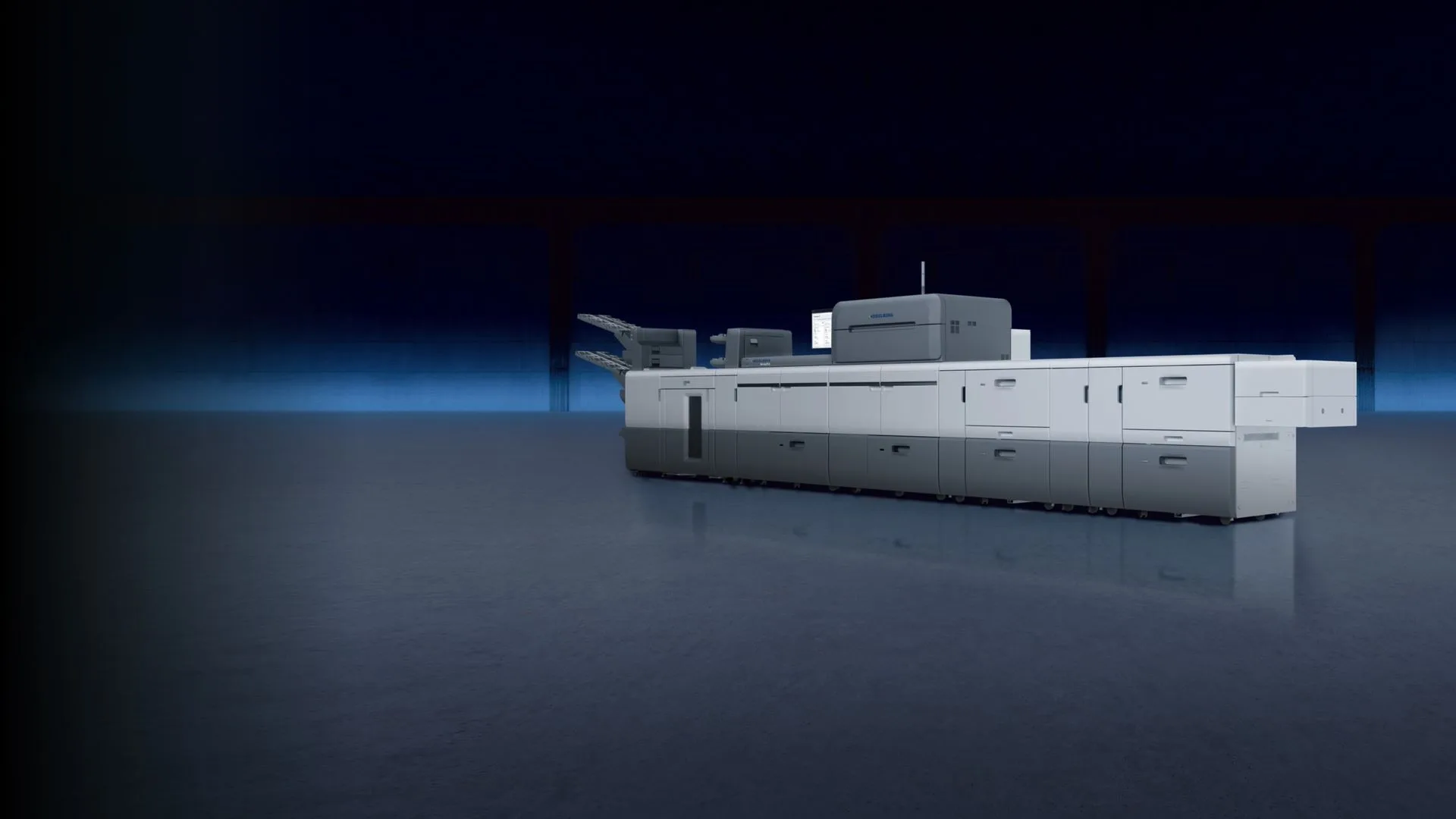
Personalised print on Heidelberg Versafire
Variable text, images and codes printed to FOGRA-certified colour standards, then enclosed and mailed in-house.
Explore the serviceGetting the data right
In a variable data job, the data is part of the artwork. A typo in a spreadsheet becomes a typo on thousands of letters, and a blank field becomes an awkward gap. Before production, your file should be cleansed (PAF-validated, de-duplicated and suppressed) and laid out so that every field maps to a place in the design.
Design for the longest record
Find the longest name, address and variable paragraph in your file and design around them. Text boxes that fit "Jo Lee" may not fit a double-barrelled surname with a title and honours.
Proofing and pack integrity
A single approved proof is not enough for a variable job. Ask for a set of live proofs drawn from real records: the longest and shortest names, records with missing fields, one example of every version and every ask-string band. Check each one against the data, not just against the design.
Personalised packs often contain more than one personalised item, such as a letter, a response form with the same ask amounts and a window envelope. If those items get out of step, one person's details end up in another person's envelope, which is both embarrassing and a data protection risk. That is why our three Buhrs enclosing lines all use 4-way Taurus camera matching, which reads each item and verifies that the right documents are going into each envelope before it is sealed. A Driver Southall checkweigher on every machine also checks that each pack weighs what it should.
Once enclosed, personalised mail is sorted and barcoded for Royal Mail. Our Mailmark guide explains how that works, and how to plan a direct mail campaign shows where personalisation fits in the overall timeline.