Quick answer
Custom printed packaging is a box, sleeve, mailer or tag made to your product's dimensions and printed with your own branding. Getting it right comes down to six decisions: the construction (folding carton, corrugated or rigid), the box style (how it opens and closes), the board, the print method (litho for longer runs, digital for short runs and samples), any finishes (foil, embossing, soft-touch, spot UV) and the artwork, which is laid out on a dieline: a flat plan of the box showing every cut, crease and glue area. Quantity, board, size and finishes drive most of the cost. Plan recyclability in from the start, because finishes and plastic windows can make a box harder to recycle.
Key takeaways
- Start with the product: its size, weight, fragility and where it will be sold or shipped decide the construction and style before any design work begins.
- Folding cartons suit retail shelves and lighter products; corrugated suits posting and heavier items; rigid boxes suit gifts and luxury goods.
- Artwork is set up on a dieline supplied for your exact box. Designing first and fitting the dieline afterwards is the most common cause of reprints.
- Each new box shape needs its own cutting forme, so a standard style in a new size usually costs less to tool than a fully bespoke structure.
- Paper-based packaging recycles best when laminates, coatings, inks, varnishes and adhesives stay at no more than 10% of the pack's weight (CPI guidance, 2022).
What counts as custom printed packaging?
Custom printed packaging covers anything that holds, protects or presents a product and carries your branding. For most brands it starts with a printed box, but the finished pack often includes sleeves, inserts, labels and tags as well. Each piece has a different job, so it pays to plan them together.
| Packaging type | What it is | Typical uses |
|---|---|---|
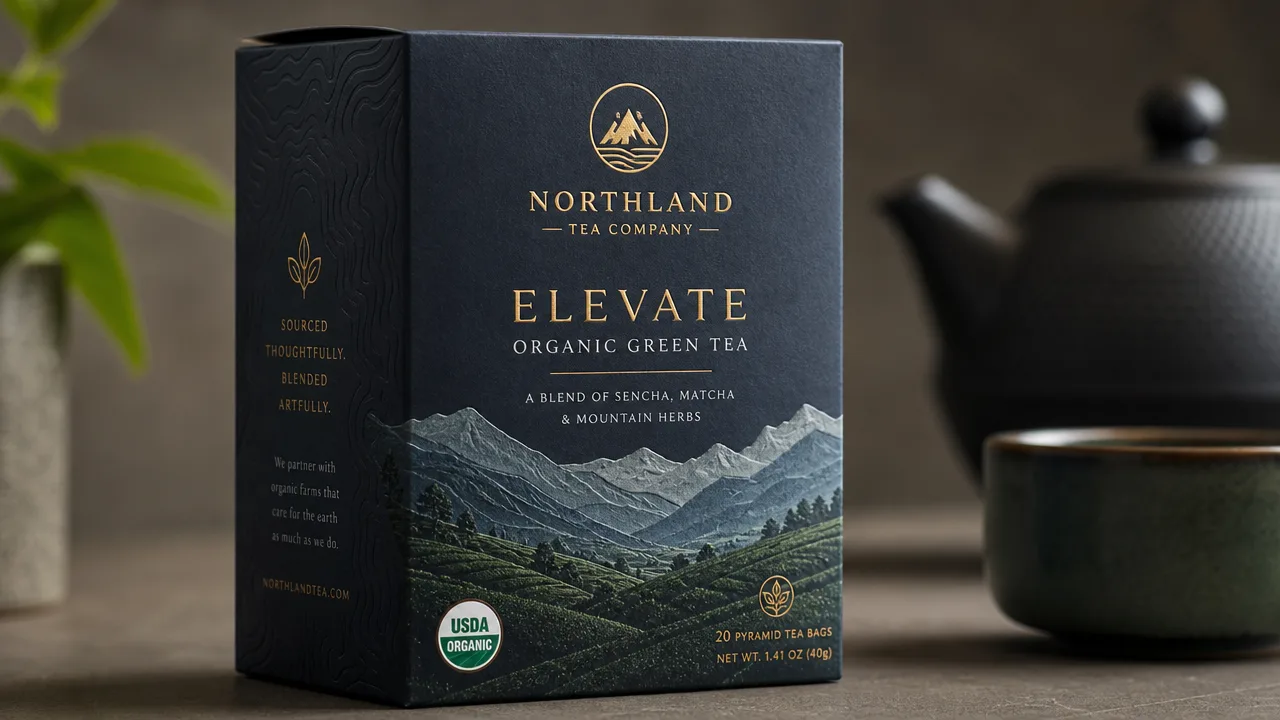
| Folding carton | Printed paperboard, cut and creased so it folds into a box | Retail products on shelf: food, cosmetics, tea, health products, small electronics |
| Corrugated box or mailer | Fluted board between liners; strong and light | E-commerce mailers, subscription boxes, shipping outers, heavier products |
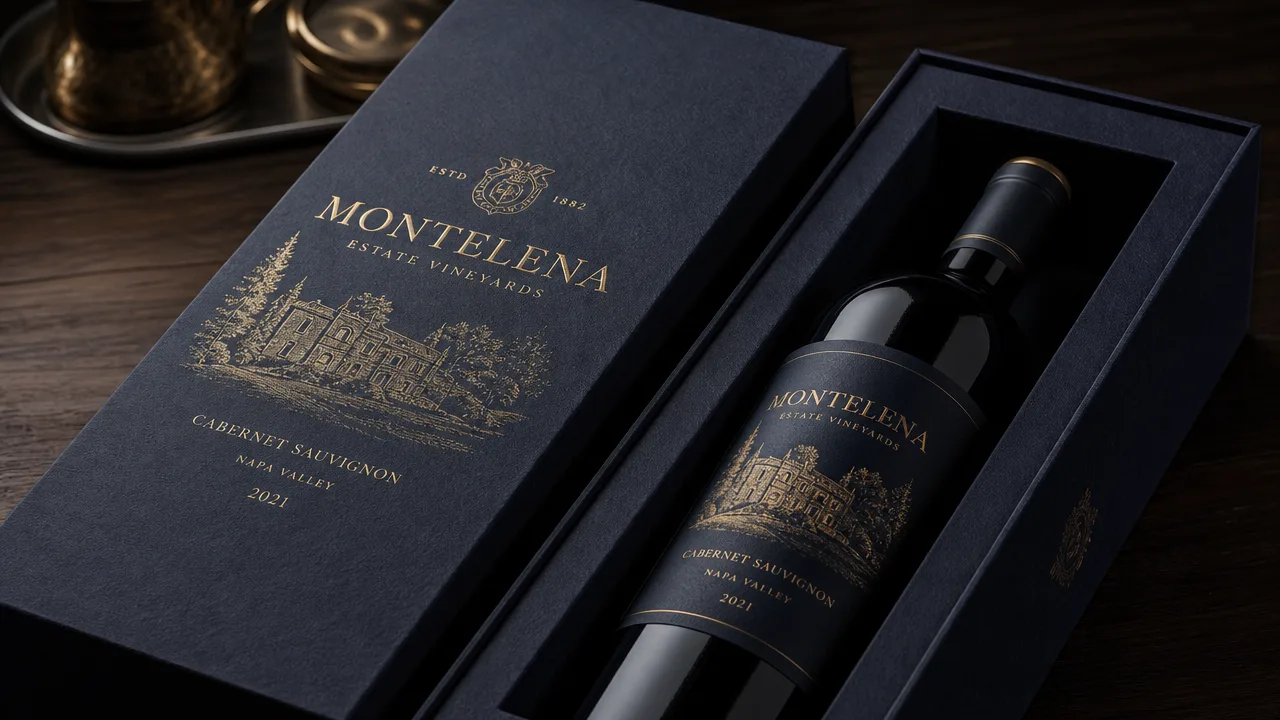
| Rigid box | Thick greyboard wrapped in a printed paper, does not fold flat | Gift sets, premium spirits and wine, jewellery, luxury presentation |
| Sleeve or belly band | A printed wrap that slides over a box, tray or product | Seasonal or limited editions over a standard box; food trays |
| Inserts and dividers | Board fitments that hold products in place inside the box | Gift sets, multi-item kits, fragile items |
| Swing tags and labels | Printed tags or labels attached to the product or pack | Fashion, gifts, food and drink, product information |
Choose the construction and box style
The first decision is construction: folding carton, corrugated or rigid. It sets the strength, the print quality you can achieve, how the boxes are stored and delivered, and much of the cost. Our comparison of folding carton vs corrugated vs rigid boxes goes through each in detail.
The second is style: how the box opens, closes and holds its contents. A reverse tuck end carton, a crash lock base for heavier products, a sleeve and tray for a premium reveal, a roll-end mailer for posting. See box styles explained for when each one fits.
Use the industry codes to describe a style
Standard box styles have reference codes. Folding cartons are catalogued in the ECMA Code from the European Carton Makers Association, and corrugated designs in the FEFCO Code, which the European Federation of Corrugated Board Manufacturers describes as the internationally applied system for corrugated packaging design. Quoting a code, or sending a photo of a box you like, avoids long written descriptions.
- Product size and weight: measure the product (or its inner pack) in millimetres: length, width and depth. Heavier products may need a crash lock base or corrugated board.
- Where it will be sold: a shelf, a counter display, online, or a gift shop. Shelf boxes need strong front panels; posted boxes need protection.
- How it will be packed: by hand or on a packing line. Machine packing needs a style and board the line can handle.
- How it will open: a simple tuck for everyday products; a lift-off lid, magnetic closure or sleeve for gifts.
Printing on board: litho, digital and colour
Most printed cartons are printed as flat sheets, then cut to shape and creased. Larger runs are usually printed litho, which gives the best colour consistency and the lowest cost per box as quantities rise. Digital print suits short runs, test markets and samples, because there are no plates to make. Our guide to litho vs digital printing explains the crossover.
| Litho on board | Digital on board | |
|---|---|---|
| Best for | Longer runs and repeat orders | Short runs, samples, prototypes and seasonal versions |
| Colour | CMYK plus Pantone spot colours; very consistent across a run | CMYK; close brand matching but no true spot inks |
| Set-up | Plates for each colour, so a higher fixed cost | No plates, so a low fixed cost |
| Cost per box | Falls steeply as quantity rises | Fairly flat, whatever the quantity |
| Versions | Each design needs its own plates | Easy to change designs or personalise within a run |
Our two B2 Heidelberg litho presses, a five-colour Speedmaster XL 75 and a four-colour CX 74, both have inline coaters and print folding cartons as part of their regular work. Colour is checked against measured targets throughout the run, which matters on packaging, where one carton sits on the shelf next to another. If your brand colour is a Pantone, see CMYK vs RGB vs Pantone for when a spot colour is worth it.
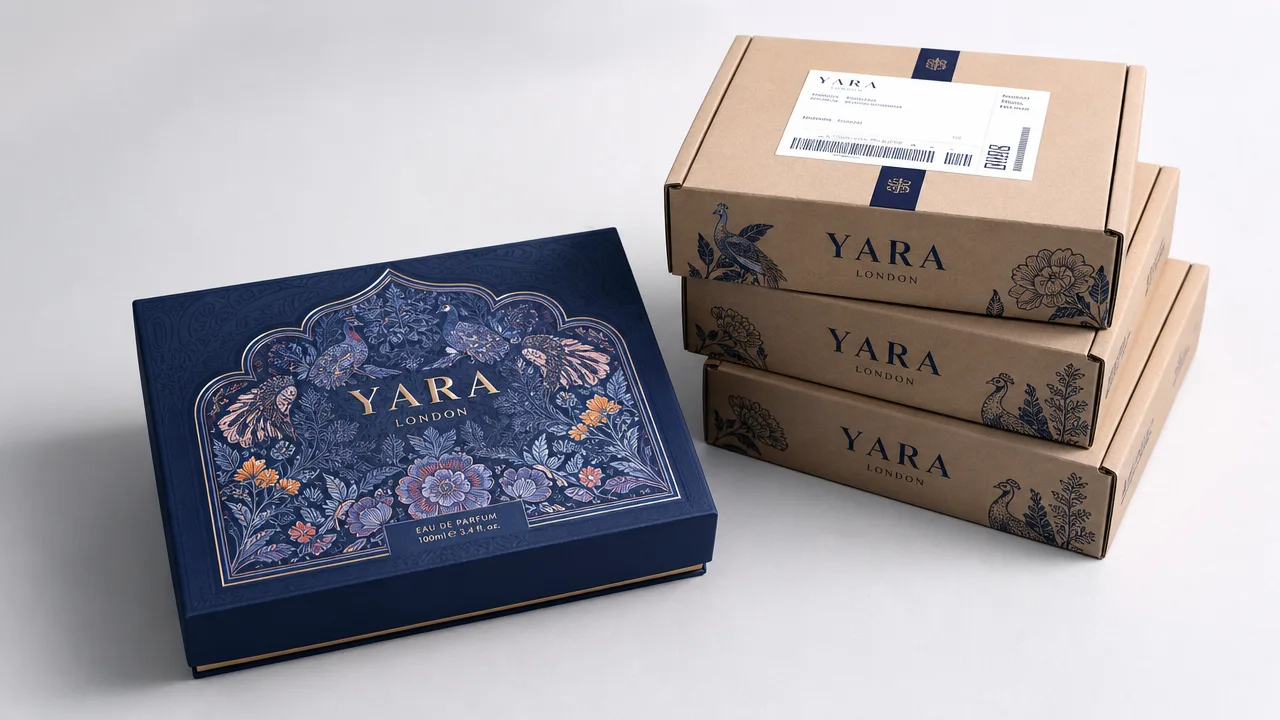
Bespoke packaging, printed and finished in Keighley
Cartons, mailers, sleeves and tags printed on our Heidelberg presses, with foil, embossing, soft-touch and spot UV finishing in-house.
Explore the serviceFinishes that make packaging stand out
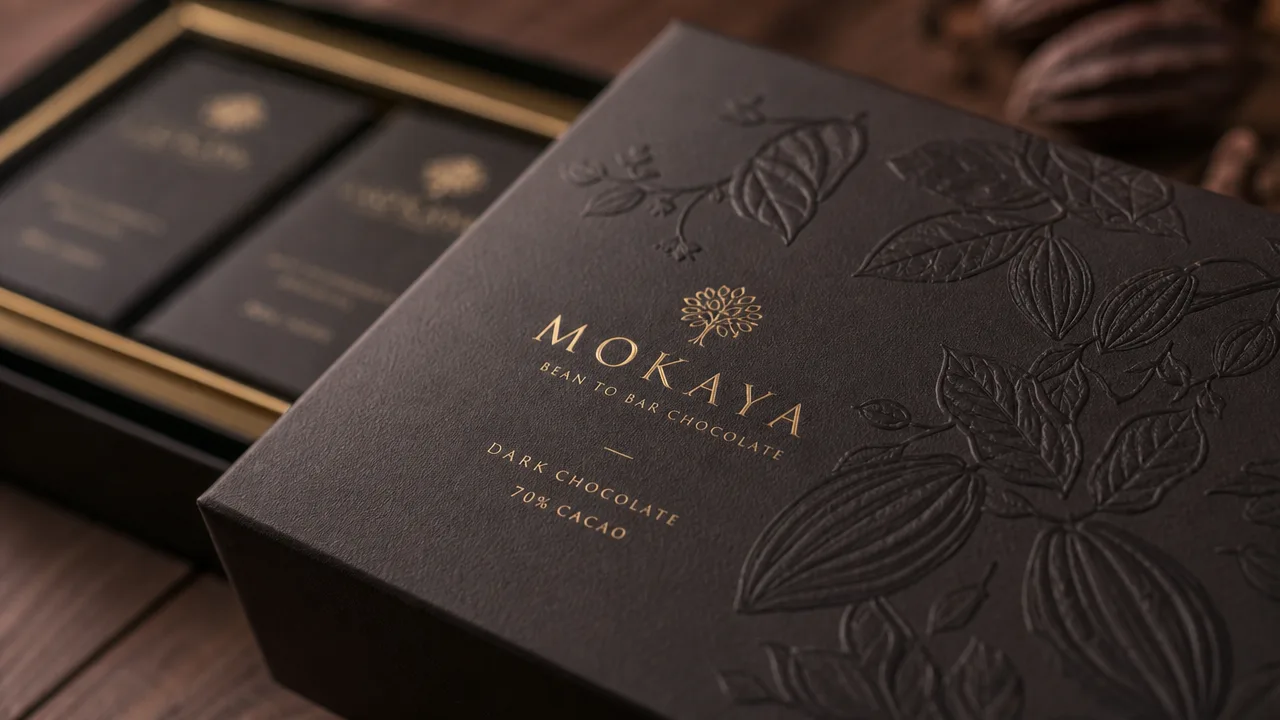
Finishes do more work on packaging than on almost any other print. A foil logo or an embossed pattern is often the first thing a shopper notices, and soft-touch lamination changes how a box feels in the hand. We laminate (gloss, silk and soft-touch), spot UV, foil block in gold, silver and custom colours, and emboss and deboss in-house.
| Finish | Effect on packaging | Watch out for |
|---|---|---|
| Foil blocking | Metallic or coloured shine on a logo or pattern | Very fine detail can fill in; a die is made for each design |
| Embossing / debossing | Raised or recessed design you can feel | Shows on the inside of the box; needs a suitable board thickness |
| Soft-touch lamination | Velvety, premium feel | Adds plastic film, which affects recyclability |
| Spot UV | Gloss highlight against a matt background | Needs its own artwork layer, exactly registered |
| Window | Lets the product show through | Plastic window film is a non-paper component |
Our packaging finishes guide covers how to combine finishes on board, and print finishes explained covers each process in more depth.
Artwork and dielines
Packaging artwork is laid out on a dieline: a flat drawing of the opened-out box that shows the cut lines, crease lines, glue areas and bleed. Your designer places each panel's artwork in position on it, so the front ends up on the front and the text reads the right way up once the box is folded.
- 1
Get the dieline for your exact box
Ask for the dieline once the style, board and dimensions are agreed. A dieline from another box, even one that looks the same, will not match your board thickness.
- 2
Keep the dieline on its own layer
Supply it as a separate, non-printing layer or spot colour so it can be checked against the artwork but never prints.
- 3
Add bleed and keep text clear of folds
Run background colour past the cut lines and keep important text and barcodes away from creases and glue areas.
- 4
Supply finishes as separate layers
Foil, spot UV and embossing each need their own layer showing exactly where they go.
- 5
Check a physical sample
A plain or printed sample shows orientation, fit and how the product sits before the full run.
Our step-by-step guide to packaging dielines and artwork covers barcodes, panel orientation and file settings. The general rules for bleed, resolution and PDFs are in how to set up artwork for print.
From brief to delivery: how a packaging job runs
- 1
Brief
Product dimensions and weight, quantities, box style, board, print, finishes and delivery. Our packaging brief template lists everything a printer needs to quote.
- 2
Structure and dieline
The box structure is agreed and a dieline produced for your dimensions and board.
- 3
Sample
For a new structure, a sample confirms the fit before artwork is finalised.
- 4
Artwork and proof
Your designer works to the dieline. The artwork is checked for bleed, colour and finish layers, and a proof is issued for approval.
- 5
Print and finish
Sheets are printed, then coated, laminated, foiled or embossed as specified.
- 6
Cut, crease and glue
Sheets are cut to shape with a cutting forme, creased so they fold cleanly, and glued where the style needs it. Most cartons are delivered flat.
- 7
Assembly and packing
Where needed, boxes can be hand assembled, inserts fitted or products packed. We offer handwork and contract packaging in-house.
Lead times depend on tooling
A box in a style and size that already has a cutting forme can move straight to print. A new shape needs a forme made first, and a fully bespoke structure may need a sample round as well. We confirm the schedule when the order is placed.
What drives cost, and how to keep packaging recyclable
- Quantity: set-up costs are shared across the run, so the cost per box falls as quantities rise.
- Size and sheet yield: how many boxes fit on a printed sheet. A small change in dimensions can add or save a box per sheet.
- Board: thicker, specialist or FSC-certified boards vary in price.
- Colours: extra Pantone spot colours add plates and set-up on litho.
- Finishes: each finish is an extra process, and foil and embossing need their own dies.
- Tooling: a new cutting forme for each new shape.
- Extras: windows, inserts, hand assembly and packing.
Recyclability is now part of the specification as well as a brand choice. The Confederation of Paper Industries' Design for Recyclability Guidelines recommend keeping problem components (laminates, coatings, inks, varnishes and adhesives) to a maximum of 10% of a pack's weight. Uncoated or press-coated board, paper-based windows or no window, and FSC-certified board all help. See sustainable packaging and FSC certified paper.
| Your business | EPR status |
|---|---|
| Under 25 tonnes of packaging a year, or turnover of £1 million or less | No obligation |
| 25 to 50 tonnes and over £1 million turnover, or over 50 tonnes and £1 million to £2 million turnover | Small producer: register and report packaging data once a year |
| Over 50 tonnes and over £2 million turnover | Large producer: register, report every 6 months, and pay fees, including a yearly fee for household packaging |
Sources
- GOV.UK – Extended producer responsibility for packaging: who is affected and what to do (updated 19 August 2026)
- Packaging Law – UK paper industry publishes revised recycling guidelines (CPI Design for Recyclability, Oct 2022)
- FEFCO – The FEFCO Code for corrugated packaging design
- Pro Carton – The ECMA Code of Folding Carton Designs (2010)