Quick answer
Folding cartons are made from a single layer of printed paperboard, delivered flat and folded into shape by the packer. They give the sharpest print at the lowest unit cost, which makes them the standard for retail shelves. Corrugated boxes have a fluted middle layer between two liners, which makes them far stronger and the right choice for posting and shipping, though print is usually less crisp. Rigid boxes are made from thick greyboard (often 2–3mm) wrapped in printed paper. They arrive made up and feel the most premium, but cost the most to make, store and transport. Choose by what the box has to do: sell on a shelf, survive the post, or be kept.
Key takeaways
- Folding cartons: best print quality and lowest cost per unit, shipped flat. Best for retail products up to moderate weights.
- Corrugated: strongest for the weight, built for the parcel network. Thin E-flute prints best; thicker flutes and double wall protect heavier items.
- Rigid: the most premium feel and the highest cost. Most are delivered made up, so they take far more storage and freight space.
- All three can be printed and finished, but the best results on corrugated and rigid boxes come from printing on paper that is then laminated or wrapped onto the board.
- For recyclability, keep non-paper parts such as plastic film, windows and heavy coatings to a minimum. UK paper industry guidance suggests no more than 10% of a pack's weight.
Folding carton vs corrugated vs rigid at a glance
| Factor | Folding carton | Corrugated | Rigid box |
|---|---|---|---|
| Construction | One layer of paperboard, cut, creased and glued | Fluted paper between two flat liners | Thick greyboard wrapped in printed paper |
| How it arrives | Flat, folded by the packer | Flat, folded by the packer | Usually made up; collapsible versions ship flat |
| Print quality | Excellent: printed directly by litho or digital | Good on thin flutes; best when a printed sheet is laminated on | Excellent: the wrap paper is printed before wrapping |
| Strength | Light to moderate products | High; designed for shipping and stacking | High crush resistance; heavy and bulky |
| Unit cost | Lowest | Low to moderate | Highest |
| Storage and freight | Compact | Compact | Bulky, mostly air |
| Best for | Retail shelves: cosmetics, food, health, gifts | E-commerce, subscriptions, shipping outers | Luxury goods, gift sets, keepsake and presentation boxes |
Folding cartons
A folding carton starts as a printed sheet of paperboard. It is cut to shape, creased along the folds and glued along one seam, then delivered flat. The packer opens it, folds in the flaps and fills it. Because the board is smooth and printed directly, folding cartons take fine detail, photography, Pantone colours and premium finishes well.
Our two B2 Heidelberg litho presses, a five-colour Speedmaster XL 75 and a four-colour CX 74, both with inline coaters, print folding carton sheets as part of their regular work. Finishes such as foil blocking, embossing, spot UV and soft-touch lamination are done in-house in Keighley.
- Choose it for: products sold on a shelf, products that need good-looking packaging at volume, and anything light enough not to need corrugated strength.
- Watch for: weight. A heavy or fragile product may need a crash lock base, an insert, or a corrugated outer for transit. See box styles for the options.
Corrugated boxes
Corrugated board sandwiches a wavy (fluted) layer of paper between two flat liners. The flutes act like arches, giving a lot of strength and cushioning for little weight. The size of the flute is shown by a letter, and two layers of flute together make double wall board.
| Flute | Approx. combined thickness | Typical use |
|---|---|---|
| E | 1.5–2.0mm | Slim, letterbox-friendly mailers for light items; the crispest print on corrugated |
| B | 2.5–3.5mm | The all-round small parcel and postal box |
| C | 3.5–4.5mm | Bulkier or heavier loads with more cushioning |
| EB double wall | 4.5–5.5mm | E-flute print surface with extra strength |
| BC double wall | 6.0–7.0mm | Heavy-duty shipping, stacking and fragile goods |
Corrugated can be printed directly, which suits simple branding on brown kraft or white liners. For full-colour graphics, a sheet of paper printed by litho can be laminated onto the corrugated board instead, giving carton-like print on a corrugated box.
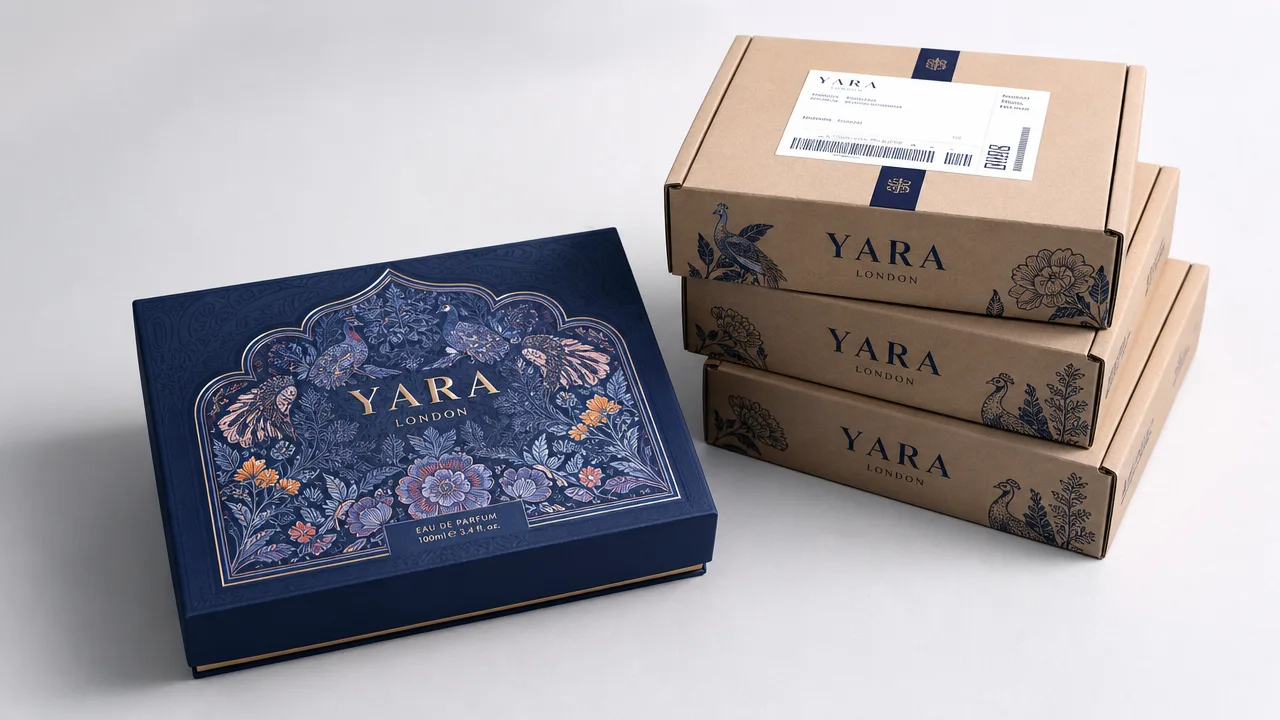
Carton inside, corrugated outside
Many brands post a printed folding carton inside a plainer corrugated mailer. The customer keeps the good-looking carton, and the corrugated outer takes the knocks in transit.
Rigid boxes
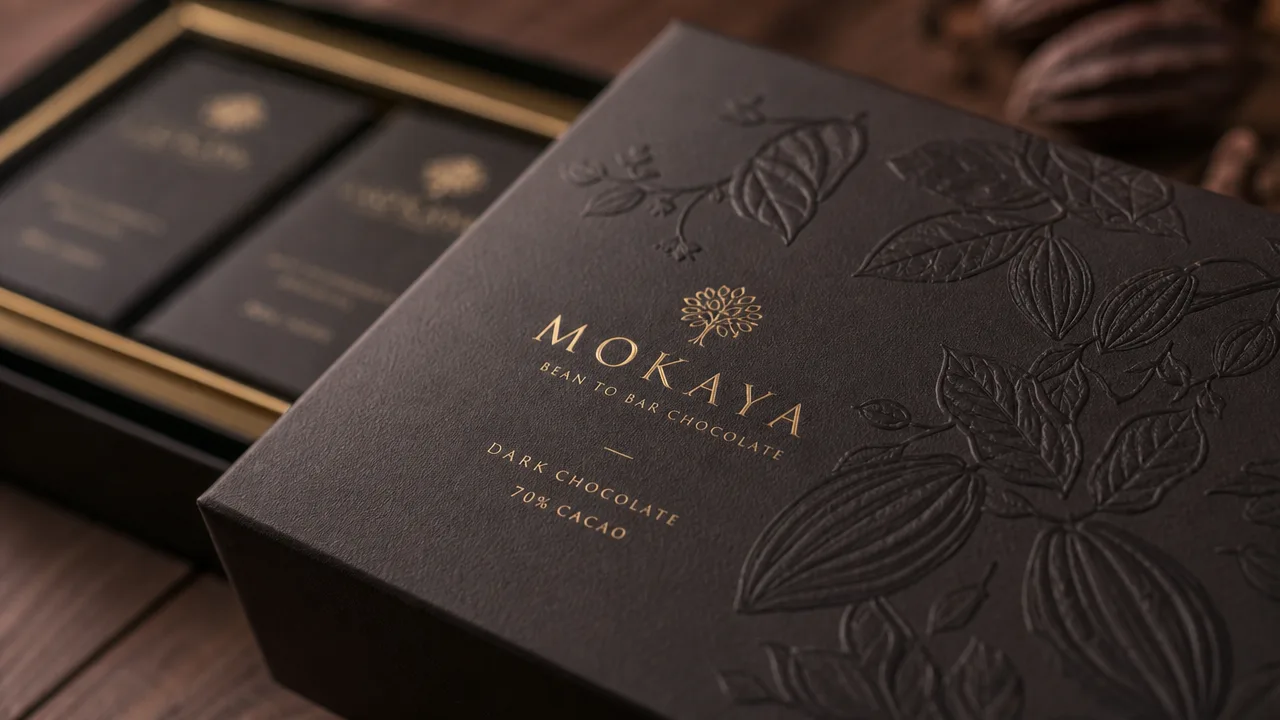
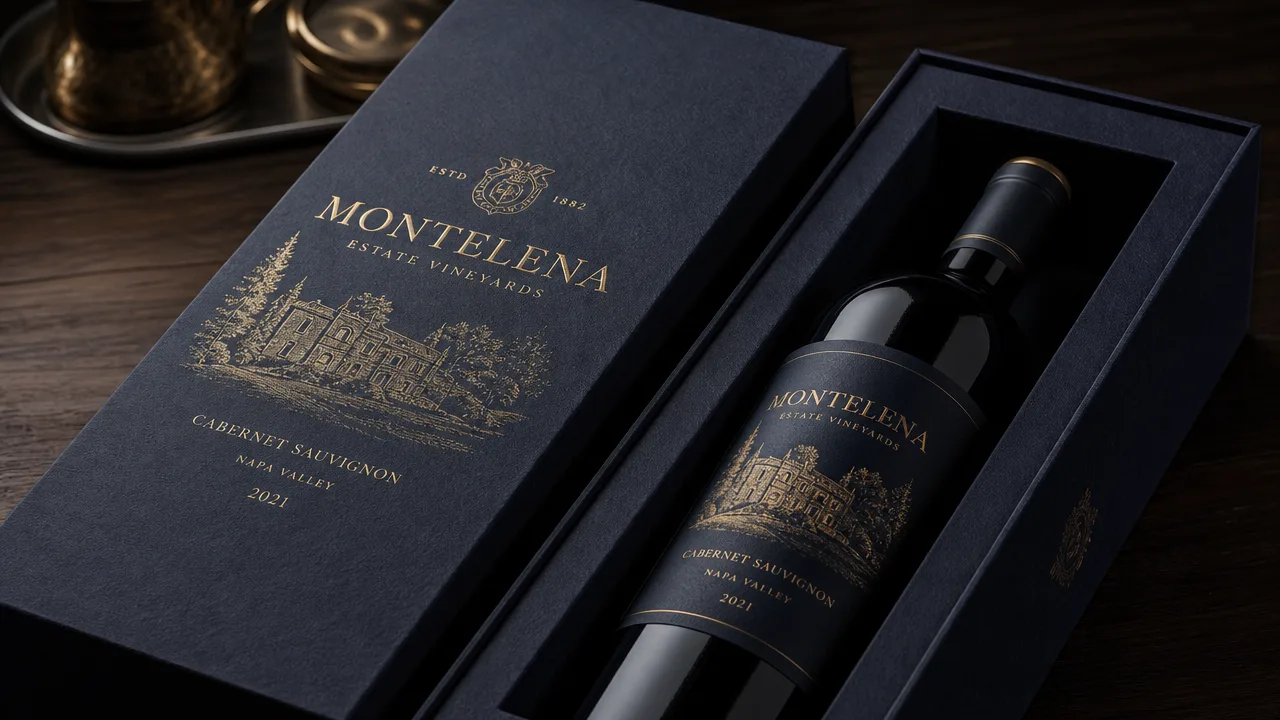
A rigid (or set-up) box is made from thick greyboard, often 2–3mm, cut and assembled into a base and lid, then wrapped in printed paper that turns over the edges. Greyboard is not printed directly; all the graphics are on the wrap. The result is a box with sharp corners and solid walls that does not flex, which is why rigid boxes are used for luxury goods, gift sets and boxes customers keep.
- Cost: rigid boxes involve much more material and hand assembly. One packaging manufacturer's guide puts them at up to three times the cost of folding cartons or corrugated, with longer lead times.
- Storage and freight: most rigid boxes are delivered made up and do not collapse, so you pay to ship and store mostly air. Collapsible rigid boxes, which fold flat and are assembled on site, reduce this.
- Finishes: the printed wrap can be foiled, embossed, spot UV varnished or soft-touch laminated before it goes onto the board.
Custom printed packaging
Retail cartons, presentation boxes and mailers, with print and finishes such as foil, embossing, spot UV and soft-touch handled in our Keighley factory. Tell us the product and we will advise on the right construction.
Explore the serviceCost, quantities and lead times
Three things drive packaging cost more than anything else: the construction (rigid costs most, folding carton least), the tooling (a new cutting forme for a new size or shape is a one-off cost, while standard sizes may reuse existing tools), and the quantity (set-up costs are spread over the run, so unit cost falls as quantity rises).
| If your priority is… | Usually the best fit |
|---|---|
| Lowest unit cost at volume | Folding carton |
| Getting through the post intact | Corrugated mailer |
| Maximum perceived value | Rigid box |
| Premium look without rigid costs | Folding carton in a heavier board with foil, embossing or soft-touch |
| Least storage space | Folding carton or corrugated, both delivered flat |
Minimum quantities and lead times depend on the construction, the board, the finishes and whether new tooling is needed, so ask for them with each quote. Our packaging brief template lists what to include.
Which is the most sustainable?
All three are paper-based and widely recyclable in principle. What usually makes the difference is what is added to the board. The Confederation of Paper Industries' Design for Recyclability Guidelines list laminates, coatings, inks, varnishes and adhesives as potentially problematic, recommend limiting them to a maximum of 10% of pack weight, and advise against strongly attached plastic windows.
- Folding cartons are light, so they use the least material for a given product. Avoid plastic film lamination if recyclability matters most, or use a press coating instead.
- Corrugated is usually made with recycled fibre and is easy to recycle when kept free of plastic tape and film.
- Rigid boxes use the most board and adhesive, and laminated wrap papers add plastic. They are often kept and reused, which counts in their favour.
FSC-certified board is available across our packaging range. For more on board, coatings and UK packaging rules, see our guide to sustainable packaging.
The verdict
The verdict
Folding cartons are the default for products sold on a shelf: the best print at the lowest cost. Corrugated is the right choice whenever the box goes through the post or carries real weight. Rigid boxes are worth their cost only when the box is part of what the customer is paying for. For many brands the answer is a combination, such as a printed carton inside a corrugated mailer. Read our complete guide to custom printed packaging for the next steps.
- Choose folding carton if…
- the product is light to moderate in weight, sold in a shop or on a shelf, and you want sharp print and premium finishes at a sensible unit cost.
- Choose corrugated if…
- the box is posted or shipped, carries heavy or fragile contents, or needs to stack in a warehouse.
- Choose rigid if…
- you are packaging a luxury product or gift set and the box itself needs to feel valuable and be kept.
Sources
- Wikipedia – Folding carton (construction and delivery flat to the packer)
- The Tiny Box Company – Choose the right flute for strength and weight
- PakFactory – Rigid boxes: construction, materials and cost compared with folding cartons
- Zenpack – Custom rigid box packaging (pre-assembled and collapsible rigid boxes)
- Packaging Law – UK paper industry publishes revised recycling guidelines (CPI Design for Recyclability, Oct 2022)