Quick answer
Sustainable packaging protects and sells the product using as little material as possible, from responsible sources, in a form that is easy to recycle. For a printed box that comes down to five choices: right-size the box so there is no wasted board or void fill, use FSC-certified or recycled board, keep the pack mostly paper by limiting plastic laminates, windows and inserts, choose finishes that stay recyclable, and print a realistic quantity. These choices now affect cost as well as reputation. Under UK packaging Extended Producer Responsibility (EPR), large producers pay disposal fees on household packaging, and packaging rated less recyclable is charged more.
Key takeaways
- A box that is mostly board, with no plastic film, window or insert, is the easiest to recycle and the easiest to rate well under EPR.
- Under the UK recyclability assessment (RAM v1.1), board packaging with 5% plastic or less by mass is assessed as paper and board, and non-paper content above 15% by weight is rated red.
- Plastic film on both sides of the board is rated red. A single soft-touch or gloss laminate should be used where it earns its place, not by default.
- Right-sizing usually saves more material than any change of finish: a smaller box uses less board, less void fill and less transport space.
- FSC certification covers where the fibre comes from. Recyclability depends on what you add to it. Sustainable packaging needs both.
What makes printed packaging sustainable?
Printed packaging is mostly paperboard, which UK household recycling collections are set up to take. The problems usually come from what is added to the board: plastic film, plastic windows, foam or plastic inserts, heavy coatings and boxes that are far bigger than the product. Most of these are decided at the brief stage, before anything is printed.
| Decision | Lower-impact choice | Why it matters |
|---|---|---|
| Box size | Sized to the product, with a snug fit | Less board, less void fill, more boxes per pallet and per van |
| Board source | FSC-certified or recycled-content board | Traces fibre to responsibly managed forests, or reuses fibre already in circulation |
| Construction | Mono-material board, ideally one piece | No separation needed before recycling |
| Surface finish | Press coating or water-based coating instead of plastic film | Keeps the pack in the paper recycling stream |
| Window | No window, or a cut-out without film | Plastic windows are a second material that has to be removed |
| Insert | Folded board or moulded pulp instead of plastic or foam | The whole pack can go in one recycling bin |
| Quantity | A realistic run, with reprints when needed | Unused, out-of-date packaging is pure waste |
Choosing board: FSC, recycled content and construction
Start with the board. FSC-certified board proves the fibre comes from responsibly managed forests, recycled sources or a mix, and lets you put the FSC logo on the pack if your printer holds chain of custody certification. We hold FSC chain of custody (C013888) and offer FSC-certified board across our packaging range. See FSC certification explained for the label types and how to check a claim.
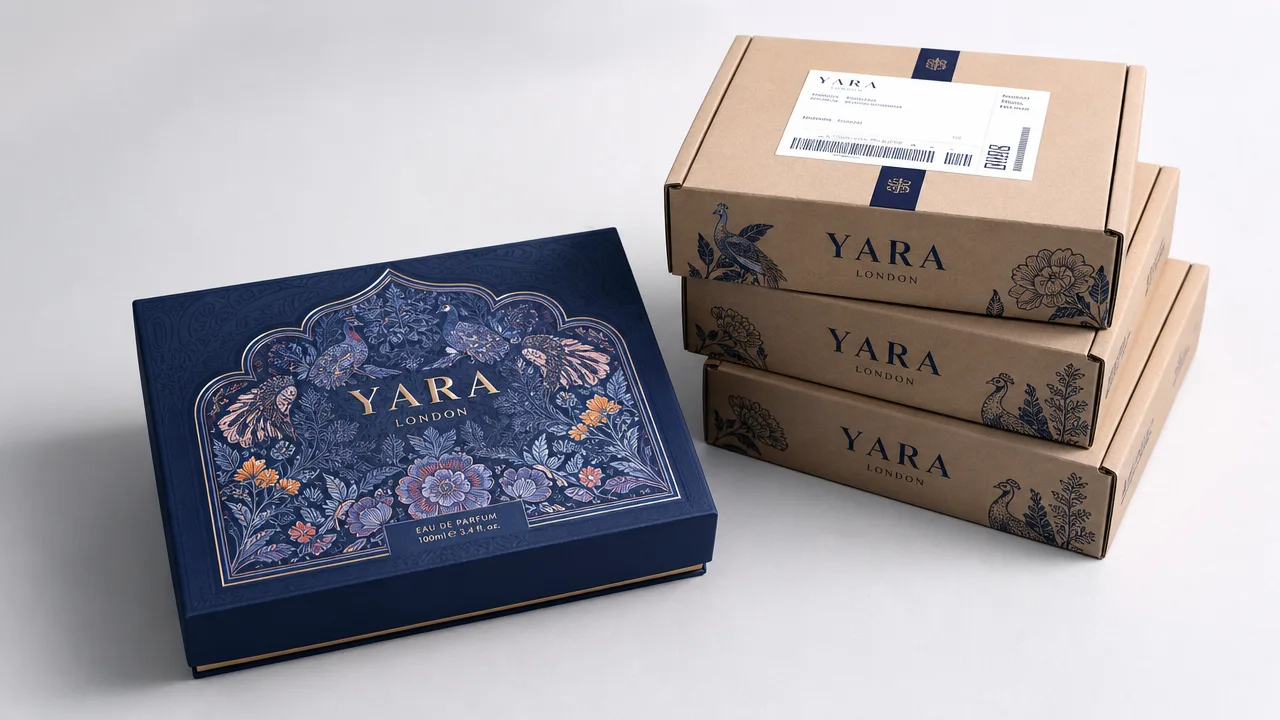
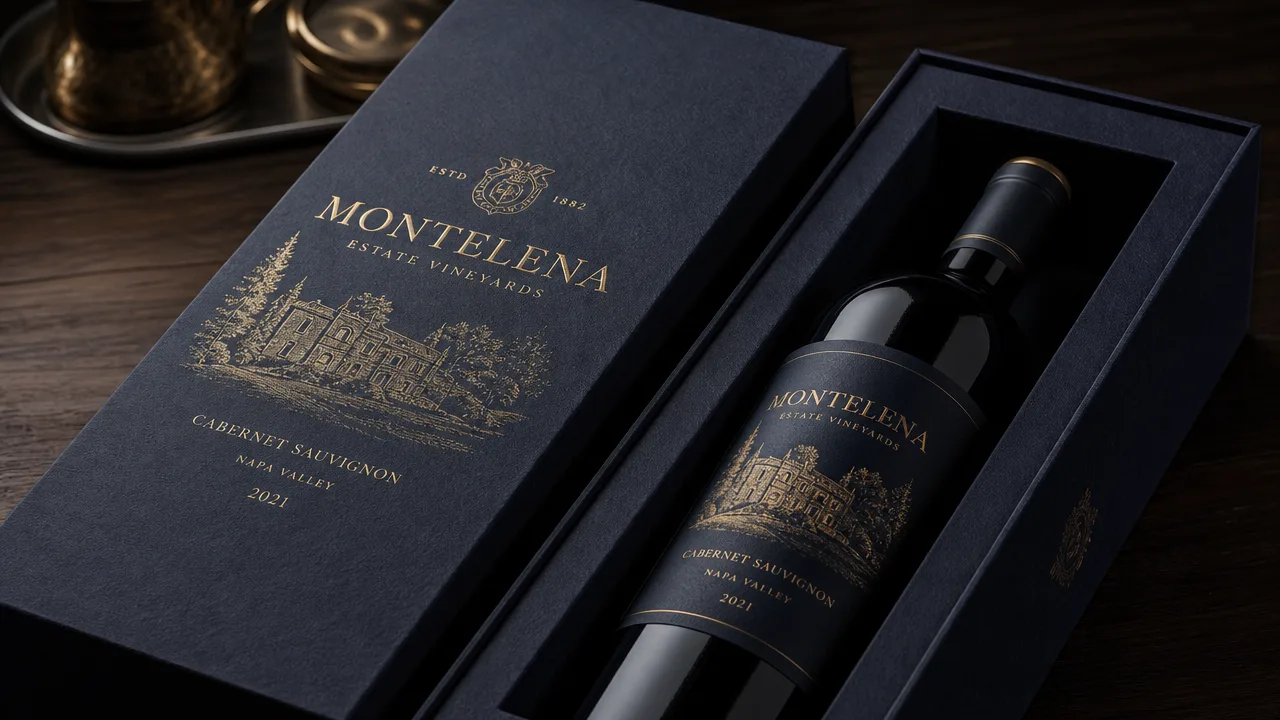
The construction matters too. A folding carton is a single sheet of printed board, which keeps it simple to recycle. Corrugated boxes are also all paper and are strong enough to protect heavier products in the post. Rigid boxes are usually greyboard wrapped in printed paper, which is heavier for the same size, but they are often kept and reused. Our folding carton vs corrugated vs rigid comparison covers the trade-offs in detail.
Use one material where you can
A box with a board insert, a board divider and no film can go straight into the paper recycling. Every extra material makes it more likely the pack is binned instead.
Finishes, windows and inserts: what helps and what hurts recycling
The UK's recyclability assessment methodology (RAM), now published by PackUK, rates household packaging red, amber or green. Large producers must use it, but its rules for paper and board are a useful design checklist for any brand. The Confederation of Paper Industries' design guidelines point the same way.
| Feature | What the guidance says | Our suggestion |
|---|---|---|
| Plastic content | RAM v1.1: board packaging with plastic content of 5% or less by mass is assessed as paper and board; above 5% it is assessed as a fibre-based composite | Keep plastic film, windows and inserts to a minimum |
| Non-paper content | RAM v1.1: non-paper content above 10% by weight is amber; above 15% is red (for packaging not classed as a fibre-based composite) | Weigh the extras, not just the board |
| Lamination on both sides | RAM v1.1: two-sided plastic lamination of paper and board is rated red, unless a take-back scheme applies | Laminate one side only, if at all |
| Aluminium foil lamination | RAM v1.1: aluminium foil laminated at 6 microns or more is rated amber | Keep metallic effects to foil blocking on small areas |
| Windows | CPI: avoid strongly attached windows; use easily detachable, thin, lightweight solutions | Consider an open cut-out or no window |
| Problem components overall | CPI: limit laminates, coatings, inks, varnishes and adhesives to no more than 10% of pack weight | Use spot finishes for emphasis rather than all-over film |
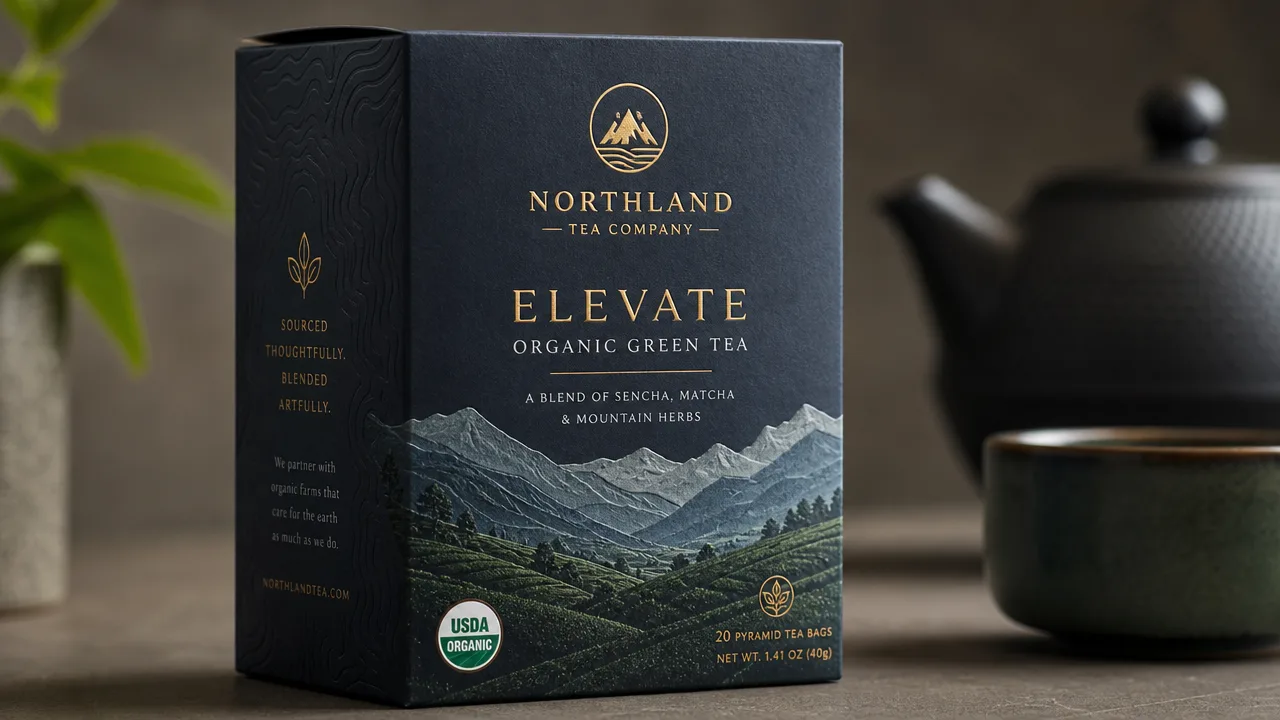
Not every premium finish is a problem. Embossing and debossing shape the board without adding material, and foil blocking on a logo adds very little weight. Soft-touch and gloss lamination add a full plastic layer, so use them when the box needs the protection or the feel, and consider a press coating when it doesn't. Our guide to packaging finishes compares each option, and the custom printed packaging guide covers the whole process from brief to delivery.
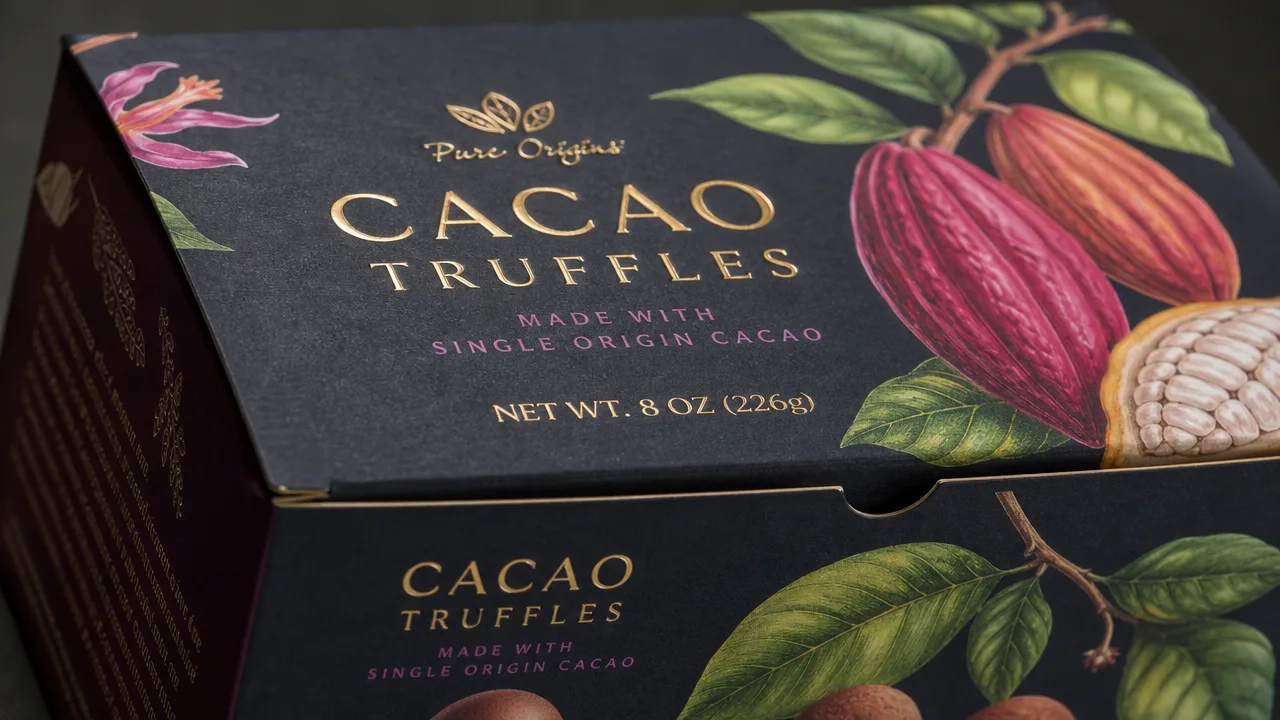
Custom printed packaging, specified with recycling in mind
Folding cartons and branded packaging printed on our Heidelberg litho presses, with FSC-certified board, water-based coatings and in-house finishing in Keighley.
Explore the serviceDesign out waste before you print
- 1
Measure the product, not the old box
Start from the product's real dimensions and weight. A box designed around last year's pack often carries extra board and void fill. Our box styles guide shows which styles fit snugly.
- 2
Remove what the customer throws away first
Tissue, plastic bags, loose fill and separate leaflets add cost and waste. Print the message inside the box instead.
- 3
Replace plastic inserts
A folded board insert or divider can often hold the product just as well, and keeps the pack mono-material.
- 4
Choose the finish last
Decide what protection the box needs in transit and on shelf, then choose the lightest finish that gives it.
- 5
Order a realistic quantity
Packaging goes out of date when products, prices or rules change. A smaller run with a planned reprint usually wastes less than one large run.
- 6
Tell people how to recycle it
Clear disposal instructions on the pack help it reach the right bin. Keep any environmental claim specific and accurate.
When you brief a printer, put sustainability targets in writing alongside size, board and finishes. Our packaging brief template has a section for this.
UK rules: packaging EPR and Plastic Packaging Tax
Two sets of UK rules put a cost on packaging. Both are run by government, and the figures below were checked on gov.uk in October 2026.
| Packaging EPR | Plastic Packaging Tax | |
|---|---|---|
| Who it applies to | UK businesses that supplied or imported more than 25 tonnes of packaging in the previous year and have turnover of £1 million or more | Businesses that manufacture or import 10 tonnes or more of finished plastic packaging components in 12 months |
| Small vs large | Large producers (over 50 tonnes and over £2 million turnover) pay a yearly waste disposal fee to PackUK for household packaging; small producers report data | One threshold; the tax is charged per tonne |
| What it costs | Disposal fees per tonne by material; red-rated (less recyclable) packaging incurs higher charges | £228.82 per tonne from 1 April 2026, on components with less than 30% recycled plastic |
| Effect on printed boxes | Every material in the pack counts, so a mostly-board, green-rated box is cheaper to put on the market | A component counts as plastic only if plastic is its heaviest single material, so most printed board cartons fall outside it; a separate plastic tray or insert may not |
Who reports the packaging?
EPR obligations sit with the brand owner, importer or business that puts the packaging on the market, not usually with the printer. We can give you the board, finish and component details you need for your EPR data and recyclability assessment.
If you make environmental claims on the pack, such as "recyclable" or "plastic-free", they need to be accurate and backed up. See making green claims about your print for what the UK Green Claims Code expects.
Sources
- GOV.UK – Extended producer responsibility for packaging: who is affected and what to do (updated 19 August 2026)
- GOV.UK – Check if you need to register for Plastic Packaging Tax (rate from 1 April 2026; updated 12 February 2026)
- GOV.UK – Work out which packaging is subject to Plastic Packaging Tax (updated 28 August 2026)
- GOV.UK / PackUK – Recyclability assessment methodology: assessing materials (v1.1, updated 4 September 2025)
- GOV.UK / PackUK – RAM 2027 overview: fee modulation (updated 20 August 2026)
- PackagingLaw.com – UK paper association publishes revised recycling guidelines (CPI Design for Recyclability, October 2022)