Quick answer
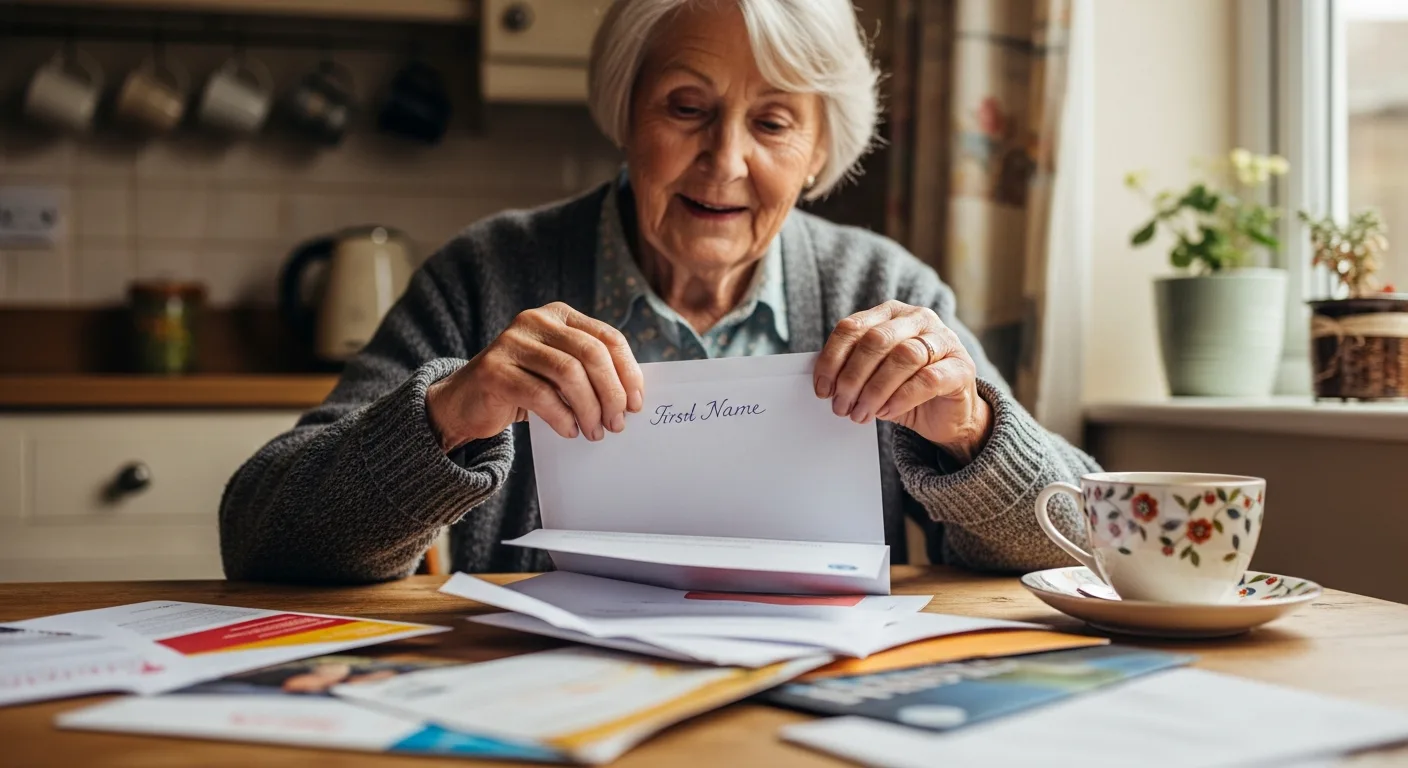
Patient letters are appointment letters, screening invitations, results and recall letters, and patient information sent by NHS and private healthcare providers. They are time-critical and confidential, and they must be accessible. A good print and mail supplier receives patient data securely, follows NHS information governance expectations such as the Data Security and Protection Toolkit and the Caldicott Principles, verifies that every letter reaches the right envelope, and can turn urgent letters round quickly. The NHS Accessible Information Standard also means some patients need their letters in another format, such as large print, braille, audio, email or Easy Read.
Key takeaways
- Patient letters carry health data, so how they are handled matters as much as how they are printed: secure transfer, restricted access, audit logs and agreed destruction dates.
- The Accessible Information Standard applies to all providers of publicly funded NHS and adult social care services. The 2025 revision has six steps: identify, record, flag, share, meet and review needs.
- The Caldicott Principles include using the minimum necessary confidential information. For mailings, send the supplier only the fields the letter needs.
- Many trusts now send letters through the NHS App or by text first, but paper is still sent in many cases, for example when patients ask for it or no mobile number is held.
- Keep clinical detail off the outer envelope and out of the address window, and check your trust's own confidentiality policy for what may appear.
Types of patient letter
Patient communications vary in urgency, volume and sensitivity. Planning each type separately makes it easier to choose the right production route, postage and turnaround.
| Letter type | Typical volume pattern | What matters most |
|---|---|---|
| Outpatient and admission appointments | Daily files, often small batches | Speed: a letter that arrives after the appointment is wasted. Next-day production for urgent letters |
| Screening invitations (bowel, breast, cervical, AAA) | Rolling waves by postcode or GP list | Accurate cohort selection, scheduling across waves, and consistent personalisation |
| Results, recalls and reminders | Event-driven | Confidentiality and correct matching of each letter to its patient |
| Patient information leaflets and booklets | Print runs, often reprinted | Version control and readability; often enclosed with appointment letters |
| Trust-wide communications | Mixed, across several sites | One consistent standard and one supplier relationship across hospitals and community sites |
General guidance, not legal or information governance advice
This guide summarises published NHS and government guidance as it relates to printed patient letters. Your information governance lead and Caldicott Guardian decide how patient data may be used and shared.
Data security and confidentiality
The National Data Guardian's eight Caldicott Principles set the expectations for anyone handling confidential health information in England. Several apply directly to outsourced print and mail: use confidential information only when necessary, use the minimum necessary, restrict access to a strict need-to-know basis, and make sure everyone with access understands their responsibilities.
Organisations with access to NHS patient data and systems use the NHS Data Security and Protection Toolkit (DSPT) to assess themselves against the National Data Guardian's data security standards. Fretwell operates processes aligned with the toolkit's ten data security standards, alongside our ISO 27001 certification, which is independently audited and renewed annually.
Our guide to data security for mailings covers supplier due diligence and Article 28 processor contracts in more detail.
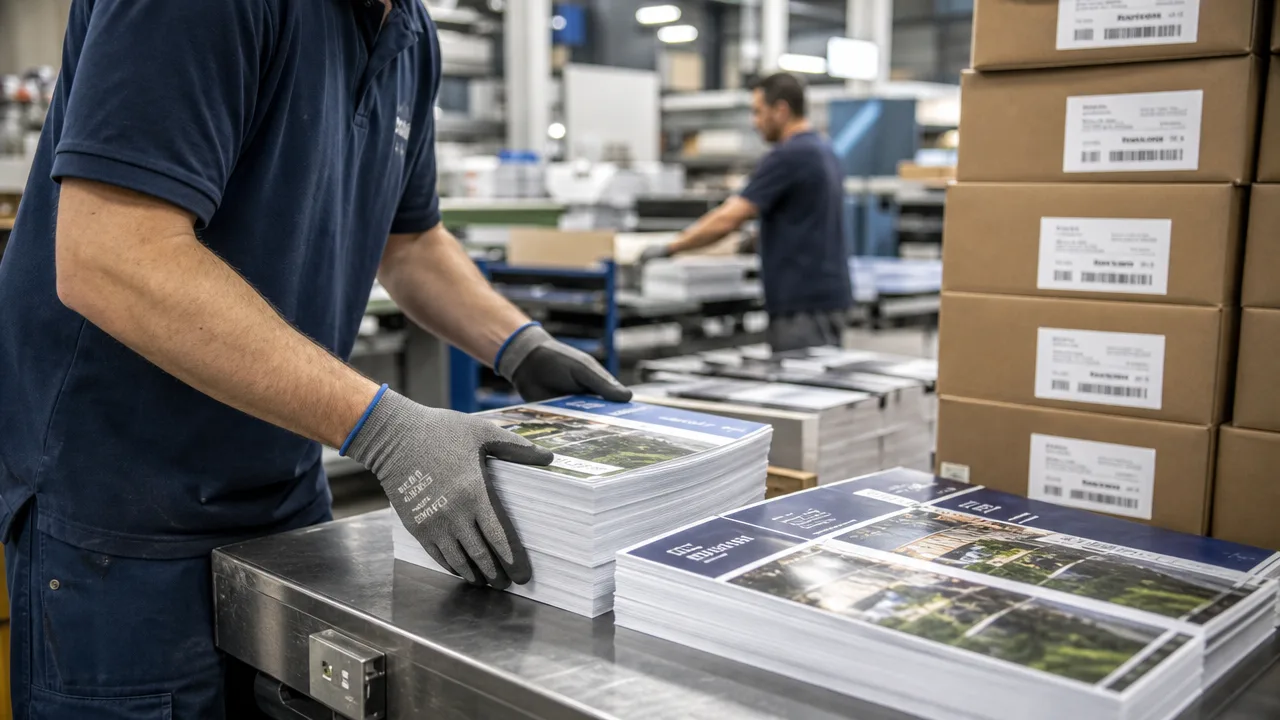
Secure data processing for patient mailings
Patient files are received by encrypted SFTP, processed on isolated infrastructure and destroyed on the agreed date, under our ISO 27001-certified system.
Explore the serviceAccessible letters and the Accessible Information Standard
The Accessible Information Standard (DAPB1605) is an NHS information standard published under section 250 of the Health and Social Care Act 2012. It applies to "all providers of publicly-funded NHS, public health and adult social care services", including NHS trusts, GP practices and commissioned social care services. It aims to make sure disabled people and people with impairments or sensory loss get information they can access and understand.
The revised standard, published in July 2025, sets out six steps: identify, record, flag, share, meet and review each person's information and communication needs. The sixth step, review, was added in 2025. RNIB's guidance lists the kinds of alternative format services should provide, such as large print, email, audio, braille or Easy Read.
For printed letters, the practical effect is that your patient data may flag some people as needing a different format. Agree in advance how those records will be handled: whether they are removed from the standard print file and produced separately, and who produces each format. Not every format is a print job, and specialist formats such as braille and audio are often produced by specialist suppliers. Ask us which formats we can produce for your letters.
Readable by default
Clear headings, plain English, a readable type size and strong contrast help every patient, not only those with recorded needs. Put the date, time and place of an appointment where they cannot be missed.
Digital-first letters and what is still printed
Many trusts now send outpatient letters through the NHS App or by text message first. Mid Cheshire Hospitals NHS Foundation Trust, for example, describes its approach as "Digital First", stressing that this "does not mean Digital Only". It still sends paper letters when patients ask for them, where clinically appropriate, to patients under 18, to patients for whom it holds no mobile number, and for breast screening.
Digital-first changes the shape of print rather than removing it. Volumes become smaller, more frequent and more varied, with paper often acting as the fallback when a digital letter is not delivered or not suitable. That suits a supplier that can process daily files and produce short runs quickly. Some providers also offer hybrid mail services, where a letter is sent electronically and printed and posted if it is not read. Policies differ between trusts, so check yours.
Producing and posting patient letters
- 1
Agree service levels
Set turnaround by letter type. Fretwell works to the service levels your clinical teams specify, with next-day production available for urgent communications.
- 2
Keep clinical detail off the outside
The outer envelope and the address window should show only what is needed to deliver the letter. Check that no specialty, clinic or clinical wording shows through the window once the letter is folded. Your trust's confidentiality policy sets the detail.
- 3
Set up the window position
The address block on the letter must line up with the envelope window, and Royal Mail's machine-sorting rules set where windows and addresses can go. See our envelope sizes guide.
- 4
Verify every pack
Where a pack has several personalised items, such as a letter and a questionnaire, camera matching confirms they belong to the same patient before the envelope is sealed.
- 5
Plan for returns
A printed return address lets undelivered letters come back, so you can update patient records rather than keep mailing an old address. Cleaning the data before each run reduces how many letters fail in the first place.
- 6
Choose the right postage
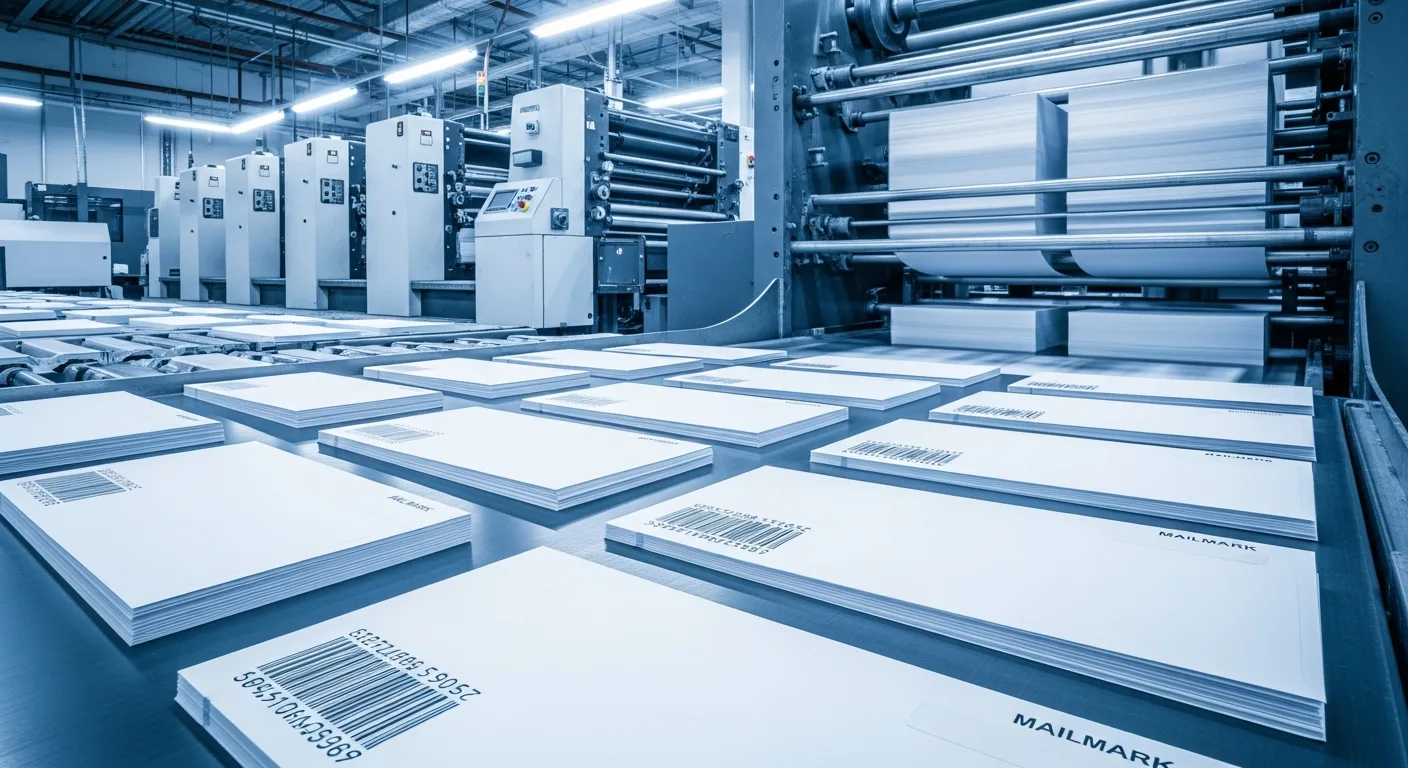
Patient letters are correspondence, not marketing, so they go as Business Mail rather than Advertising Mail. Sortation and Mailmark barcodes still reduce the cost. See our Mailmark guide.
Screening programmes add a scheduling layer: invitations go out in waves by postcode or GP list, and each wave has to be selected, personalised and posted on time. Variable data printing lets one production run handle several letter versions, for example first invitations and reminders.
Sources
- NHS England – Accessible Information Standard (DAPB1605), published standard
- RNIB – NHS Accessible Information Standard: frequently asked questions
- National Data Guardian – The Caldicott Principles (GOV.UK, December 2020)
- NHS England – Data Security and Protection Toolkit
- Mid Cheshire Hospitals NHS Foundation Trust – Digital First patient communications
- Royal Mail – User Guide for Royal Mail Advertising Mail, April 2026 (archived copy)