Quick answer
The most common leaflet folds are the half fold (one fold, four pages), the roll fold and Z fold (two parallel folds, six pages, also called a tri-fold or letter fold), the gate fold (two outer panels folding in to meet in the middle) and the cross fold (two folds at right angles). An A4 sheet roll or Z folded gives a DL leaflet (99 × 210mm) that fits a DL envelope or a rack. A Z fold opens like a concertina and suits a reveal panel by panel; a roll fold tucks the panels inside each other, so the inner panel has to be trimmed slightly narrower to sit flat.
Key takeaways
- A4 folded in half makes an A5 leaflet; A4 roll or Z folded into thirds makes a DL leaflet of 99 × 210mm, the standard size for envelopes, racks and door drops.
- Roll fold vs Z fold: both have six pages. A roll fold wraps inwards and needs a slightly narrower inner panel; a Z fold zig-zags and all panels can be equal widths.
- Gate folds give a dramatic central reveal, but the outer flaps must be slightly narrower than the centre so they close without overlapping.
- Heavier stocks and heavy ink coverage across a fold should be creased (scored) before folding, or the fibres and ink crack along the fold.
- Plan the fold before the design: decide which panel the reader sees first, which they see when it opens and which carries the call to action.
Leaflet fold types explained
Folds are named by how the panels move. Pages here means printed panels counted across both sides of the sheet, so a single fold gives four pages. The finished sizes assume a standard A4 or A3 sheet (210 × 297mm and 297 × 420mm) folded into equal panels; see our paper sizes guide for the full A series.
| Fold | Pages | How it opens | Common finished size | Best for |
|---|---|---|---|---|
| Half fold (single fold) | 4 | Opens like a card or book | A4 → A5 (148 × 210mm); A3 → A4 | Menus, programmes, simple product sheets |
| Roll fold (tri-fold, letter fold) | 6 | Outer panel opens, then the inner panel unrolls | A4 → DL (99 × 210mm); A3 → 140 × 297mm | Mailing inserts, price lists, service leaflets |
| Z fold (concertina) | 6 | Opens out in a zig-zag | A4 → DL (99 × 210mm); A3 → 140 × 297mm | Step-by-step messages, maps, leaflets that open in one movement |
| Gate fold | 6 | Two outer flaps open from the centre like doors | A4 landscape → about A5 closed | Launches, invitations, a big reveal image |
| Cross fold (French fold) | 8 | Folded in half, then in half again at right angles | A3 → A5; A4 → A6 | Maps, posters that post in a small format |
| Four-panel roll or concertina | 8 | Like a roll or Z fold with an extra panel | A4 long edge → about 74 × 210mm | Timetables, step guides, detailed price lists |
Tri-fold leaflet, letter fold or roll fold?
These are usually the same thing: an A4 sheet folded into thirds with one panel tucked inside. People sometimes say tri-fold for a Z fold too, so always confirm whether the panels should roll in or zig-zag.
Z fold vs roll fold: which should you use?
Both give six pages from one sheet and both make a DL from A4, so the difference is how the reader meets your message.
| Roll fold | Z fold | |
|---|---|---|
| How it opens | Outer flap opens, then the inner panel unfolds | Pulls open in one movement, like a concertina |
| Reading order | Controlled: front, flap, then a three-panel inside spread | Panel by panel, or the whole side at once |
| Panel widths | Inner panel trimmed slightly narrower so it sits flat | All panels can be equal |
| Inside spread | Three panels read as one spread | Three panels on each side, good for continuous images |
| Mailing and racks | Closes neatly and resists springing open | Can spring open slightly on heavier stocks |
| Best for | Service leaflets, mailing inserts, information sheets | Maps, timelines, step-by-step instructions |
In a roll fold the inner panels are trimmed slightly smaller so they sit flat when folded. If all three panels are the same width, the tucked-in panel buckles against the fold and the leaflet will not close cleanly. The right allowance depends on the paper thickness, so ask us for exact panel widths before you start the layout. Our artwork set-up guide covers bleed, safe areas and fold marks.
Paper, creasing and avoiding cracked folds
Light papers fold cleanly straight off the press. Heavier stocks and solid ink coverage across a fold need creasing (scoring) first, otherwise the paper fibres and the printed surface crack along the fold, leaving a white line. Silk and gloss coated papers show cracking more clearly than uncoated stock.
| Situation | What we do |
|---|---|
| Light text-weight leaflet, little ink across the fold | Fold directly on the folding machine |
| Heavier stock, or a solid colour or image across the fold | Crease before folding so the fold bends rather than breaks |
| Coated paper with a dark fold line | Crease and, where possible, fold with the paper grain |
| Laminated leaflet | Crease after lamination so the film does not lift or crack at the fold |
| Tear-off reply slip | Perforate inline while folding |
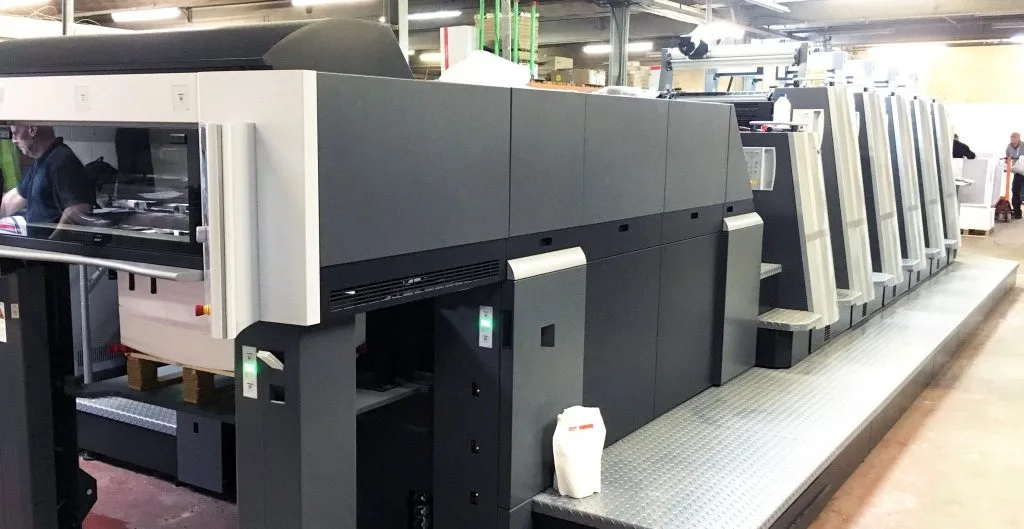
All our folding is done in-house in Keighley. Our finishing line includes a Heidelberg Stahl TH66 folder with slitters and inline perforating, four MBO B30 folders for B1 and B2 sheets with Tri-Crease scoring and perforating, and Heidelberg Ti52 and MBO T800 4/4/4 folders for other configurations. See the full plant list. For help with paper choice, read our paper weight and GSM guide.
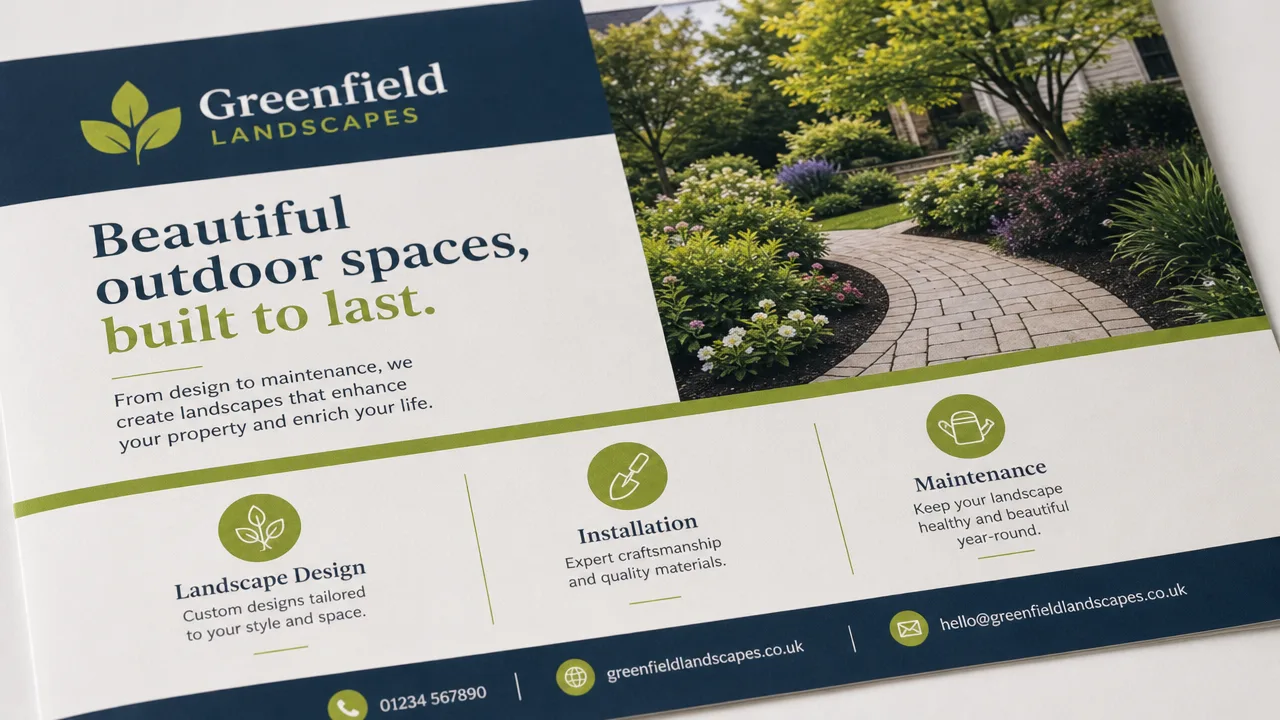
Leaflets printed and folded under one roof
Flat and folded leaflets printed on litho or digital presses, then creased, folded and perforated in-house, ready for delivery or mailing.
Explore the serviceGate folds, cross folds and panel compensation
A gate fold leaflet has two outer flaps that meet in the middle, hiding a wide central panel. It is the most theatrical fold, but the flaps cannot be exactly half the width of the centre, or they collide when closed. Vomela, a US commercial printer, advises sizing the outer panels about 1/8 inch (roughly 3mm) smaller than the inside panels, and overlapping any image that runs across the opening so the cut does not leave a gap. A cross fold is a half fold followed by a second fold at right angles. It turns a large sheet into a pocket-sized piece, which is why maps and folded posters use it.
| Fold | Design watch-outs |
|---|---|
| Gate fold | Outer flaps narrower than the centre; carry images across the opening with overlap; keep text away from the meeting edge |
| Cross fold | The second fold cuts across panels, so check text is not lost in it; heavier stocks bulk up at the corner |
| Roll fold | Inner panel slightly narrower; the panel that tucks in is not visible until the leaflet opens |
| Any fold | Keep essential text clear of fold lines; allow 3mm bleed at trimmed edges, not at folds |
Folded leaflets for mailings and door drops
A DL leaflet (99 × 210mm) fits a DL envelope (110 × 220mm) with room to enclose by machine, and it sits easily alongside a letter in a C5. That is why roll and Z folded A4 is the standard mailing insert. See our envelope sizes guide for which formats keep a pack in Royal Mail's cheaper Letter band.
| Use | Suggested fold | Why |
|---|---|---|
| Insert in a letter pack | Roll fold to DL | Closes flat and does not spring open in the envelope |
| Door drop | Half fold to A5 or roll fold to DL | Fits letterboxes easily and shows a strong front panel |
| Self-mailer | Roll or Z fold, sealed | Address panel outside, message inside, no envelope needed |
| Rack or counter display | Roll or Z fold to DL | Standard DL racks and holders |
We print, fold and enclose leaflets with the other parts of a mailing pack, so panels, envelope and weight are planned together. Read more about door drop marketing and choosing between a letter, postcard or self-mailer.