Quick answer
Before a direct mail campaign goes out, check six things: a clear objective and target; clean, compliant data; a format and creative built around one call to action; print-ready artwork and approved proofs; an agreed postage route and drop date; and tracking (unique codes, URLs or QR codes) so you can measure the result. Work through the checklist below in order, because most problems at the end of a campaign start with a step skipped at the beginning.
Key takeaways
- Set a measurable objective and a target cost per response before you choose a format.
- Clean your data against the Postcode Address File and suppression files, and record your lawful basis under UK GDPR.
- Give every pack one clear call to action and a trackable response route.
- Agree artwork deadlines, proof sign-off and the handover date with your mailing house early. We usually need 5–10 working days from approved artwork and data.
- Plan how you will match responses back to the mailing file before the mail lands, not after.
1. Strategy and objectives
Start with what success looks like. A campaign without a target is hard to judge, and even harder to improve next time.
- Objective agreed: for example donations, sales, sign-ups, renewals, appointments or reactivated customers.
- Target audience defined: existing customers or supporters (warm) or prospects (cold). Warm mail typically responds at several times the rate of cold mail.
- Budget set, including print, data processing, enclosing and postage.
- Target cost per response or ROI agreed, so you know what 'good' looks like.
- Test plan decided: what will you test (offer, format, message, audience), and how big does each test cell need to be?
- Timing agreed: drop date, any seasonal deadlines, and how mail fits with your email, social and paid search activity.
2. Data and compliance
- Lawful basis recorded under UK GDPR. Postal marketing is not covered by PECR, and legitimate interests is often appropriate. Document your assessment.
- Privacy information tells people how their data is used and how to opt out of postal marketing.
- Addresses validated against Royal Mail's Postcode Address File (PAF).
- Duplicates removed, both within the file and against any other lists in the same mailing.
- Goneaways, deceased records and opt-outs suppressed using up-to-date suppression files.
- Data fields agreed for personalisation (salutation, name, address lines, personal offer code, last gift and so on), with a sample checked by a person.
- Data transferred securely to your mailing house, with a data processing agreement in place.
Tip
Bad data costs twice: once to print and post an item that never arrives, and again in lost response. Our data processing service handles PAF validation, de-duplication and suppression before anything is printed.
3. Format and creative
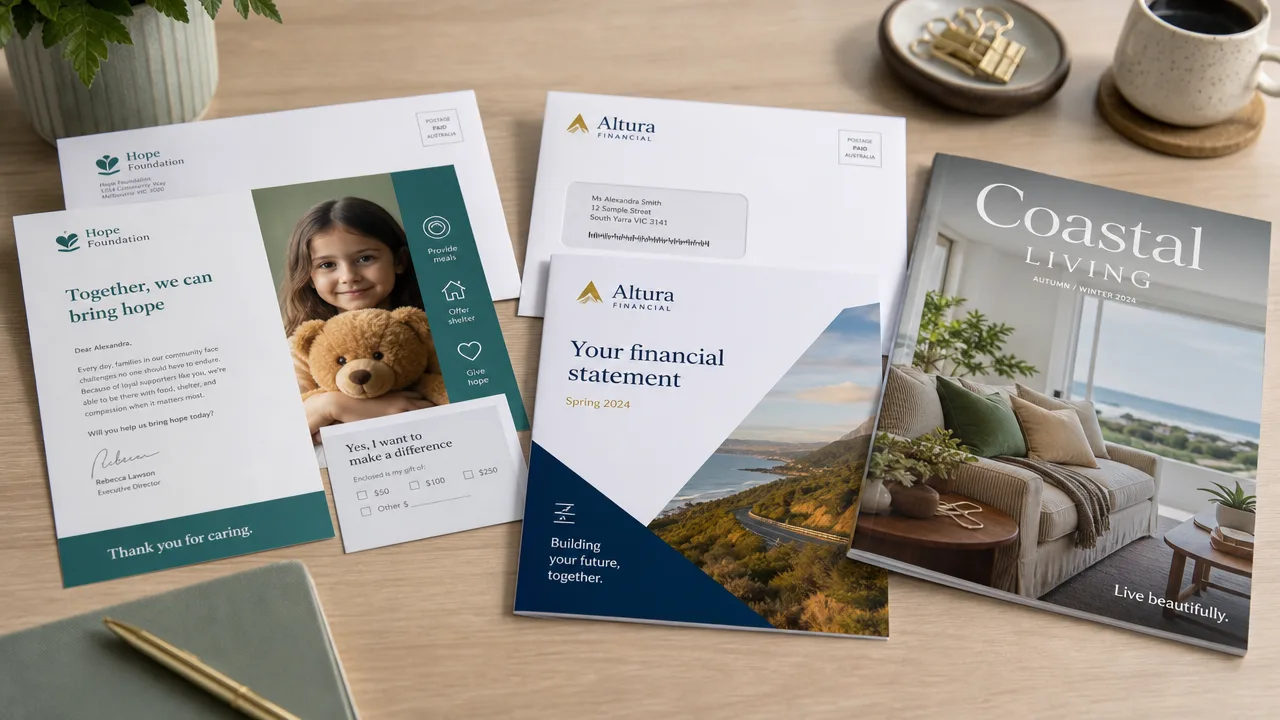
- Format chosen to suit the message: letter pack, postcard, self-mailer, catalogue or multi-item pack. JICMAIL's Response Rate Tracker found A4 mailers achieve 2.7× the response rate of postcards.
- Format checked against Royal Mail size and weight bands (letter or large letter), because they affect postage.
- One clear call to action, repeated on every component.
- Response routes included: QR code, short personalised URL, phone number, reply form or reply-paid envelope.
- Personalisation planned: what changes from pack to pack (name, offer, imagery, local store details)?
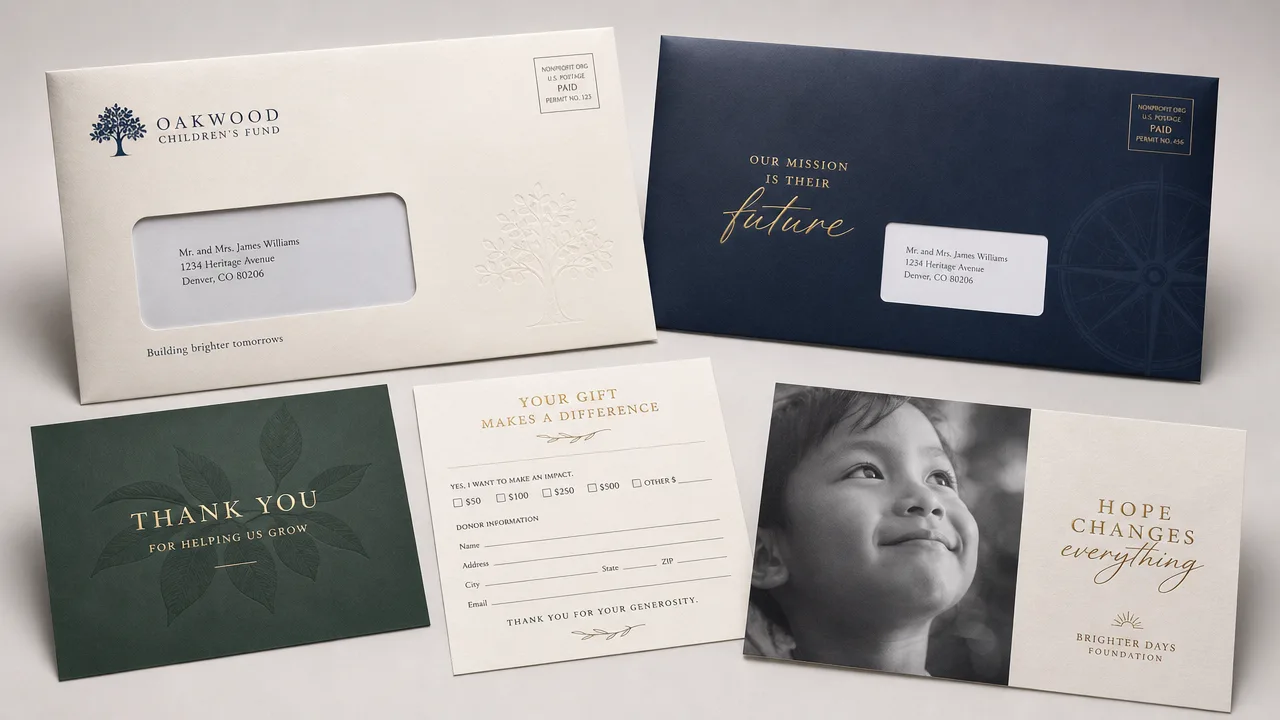
- Mailing house consulted on the specification, including envelope window position, insert sizes and folds, before artwork is finalised.
- Copy proofread by someone who did not write it, including legal and regulatory wording where required.
4. Artwork, proofs and print
- Artwork supplied as print-ready PDF with 3mm bleed, fonts embedded and images at a suitable resolution.
- Colour set up in CMYK, or Pantone references agreed if a spot colour is needed.
- Variable data proofs checked: long names, missing fields and special characters all display correctly.
- Final proofs signed off in writing, including the personalisation sample.
- Paper stock and finishes confirmed. Ask about FSC-certified and recycled options.
- Quantities confirmed, including overs for file copies, seeds and any hand-out use.
5. Postage, enclosing and handover
- Postage service chosen: Advertising Mail or Business Mail, sorted to Mailmark standard where volumes allow. Mailmark discounts typically become available from around 5,000 items.
- Advertising Mail eligibility checked, if you plan to use it, because Royal Mail sets rules on what qualifies.
- Enclosing order and matching confirmed: which items go in which pack, especially for personalised multi-part packs.
- Seed addresses added, so your own team receives copies and can confirm the delivery date.
- Handover date and delivery window agreed, allowing for Royal Mail delivery times for your chosen service.
- Mailings to the Republic of Ireland planned separately, if relevant. See our Ireland direct mail service.

Print, enclosing and postage handled in-house
We sort and barcode mailings to Mailmark standard and manage submission to Royal Mail, so you get the lowest available postage for your volume.
Explore the service6. Response tracking and follow-up
- Unique codes per test cell, so every response can be traced to the version that drove it.
- Landing page live before the mail lands, with the QR code and URL tested on a mobile phone.
- Call centre or shop staff briefed, if responses will come in by phone or in person.
- Matchback planned: responses and sales matched against the mailing file over an agreed window, not just coded responses.
- Follow-up planned: a reminder email to opted-in recipients, a second mailing wave or a phone call to high-value non-responders.
- Results reviewed against the objective and cost per response, with lessons recorded for the next campaign.
For more on measurement, read our guide to direct mail response rates. For the full process from brief to doormat, see how to plan a direct mail campaign.